Introduction
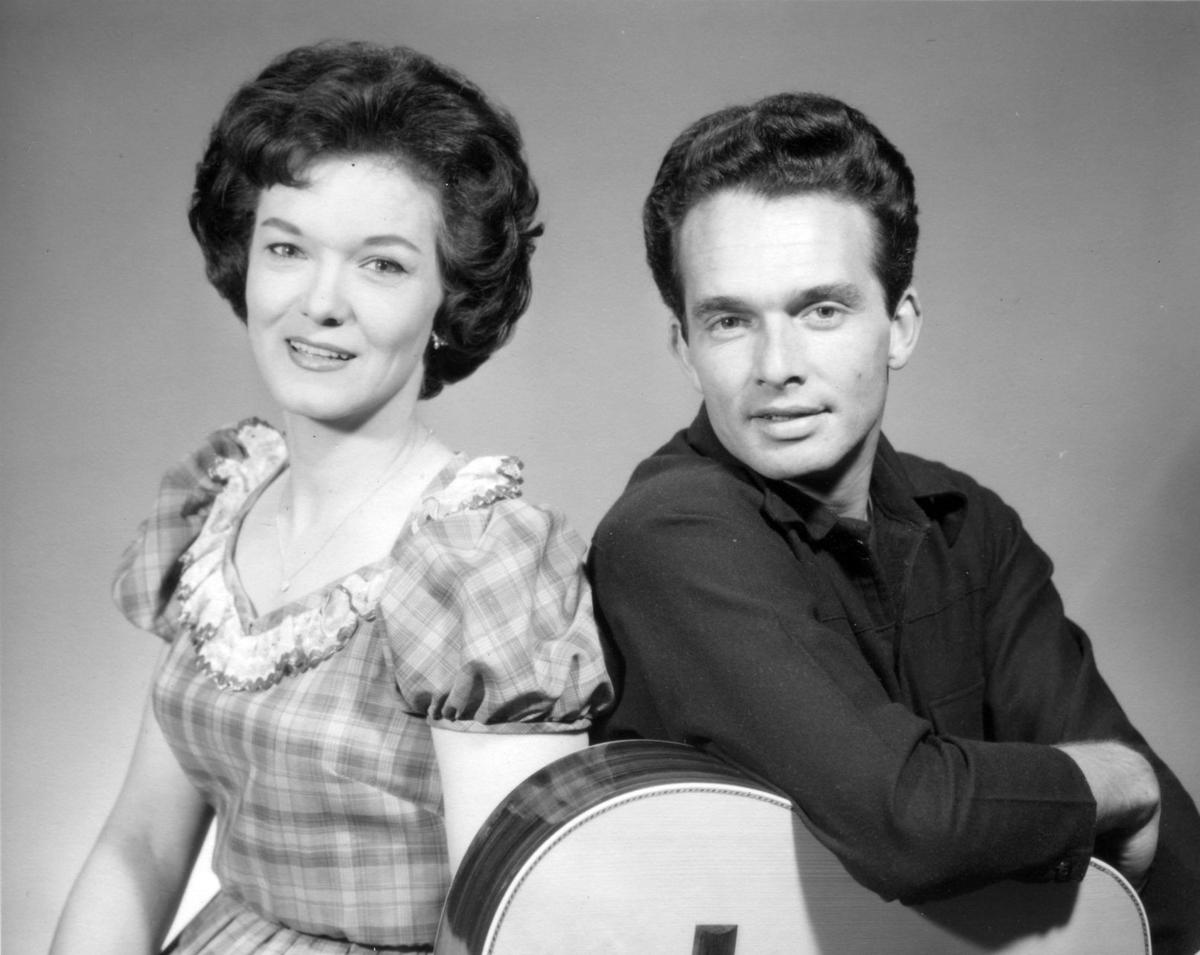
In the world of country music, the spotlight almost always belongs to the voice on stage. Audiences remember the singer, the sound, and the legend. Yet behind some of the most enduring songs in the genre stands a figure rarely seen, quietly shaping ideas before they ever reached a microphone. In the early creative years of Merle Haggard, that presence was Bonnie Owens, a woman whose role extended far beyond marriage or performance.
She was not simply a partner in life. She was a listener, an observer, and often the first to recognize when a fleeting phrase carried the weight of something lasting. Her influence existed in moments that might otherwise have disappeared, turning passing thoughts into permanent music.
By the late 1960s, Merle Haggard had entered one of the most productive periods of his career. Songs that would later define country music were being written at a relentless pace. Touring schedules were demanding. Fatigue and constant travel were part of daily life. Yet within that pressure, creativity continued to emerge, and Bonnie Owens was almost always nearby.
Whenever inspiration struck, she was ready with a notebook in hand. A lyric spoken in conversation or a melody formed without warning would be captured immediately. Nothing was left to chance. At a time before digital recording or voice memos, her attention and memory became an archive of ideas that might otherwise have vanished.
Many songs now considered classics, including Mama Tried and Workin Man Blues, were preserved through this process. Without her presence in those moments, some of these ideas could have been lost as quickly as they appeared.
What makes her contribution remarkable is not only what she did, but how she did it. She did not seek recognition or public praise. Instead, she occupied a role that often remains invisible in creative history. She understood when silence should be left undisturbed and when a passing thought deserved to be written down.
During the period from 1968 to 1969 alone, their collaborative work earned multiple BMI awards, reflecting both productivity and influence. Even with that success, Bonnie Owens remained largely outside the spotlight. Her impact lived within the songs rather than on stage.
Among all the works connected to their partnership, Today I Started Loving You Again carries a particularly deep emotional weight. Unlike songs carefully developed in controlled studio settings, this one began in real life, shaped by exhaustion and distance.
After a long stretch on the road, a brief reunion at an airport became a moment of unexpected emotional clarity. A simple remark spoken casually revealed unexpected musical potential. Bonnie Owens immediately recognized it.
“It sounded like a song,” she said, recognizing the spark before it faded.
That instinct proved decisive. Weeks later, in a roadside motel in Dallas, the song took form. In a moment marked by fatigue and urgency, Merle Haggard began writing lyrics on whatever he could find, including a torn paper bag. When Bonnie Owens returned, she found him fully absorbed in the process, shaping the song in its rawest state.
These were not carefully polished compositions. They were lived experiences transformed directly into music. The immediacy of those moments gave the song its enduring authenticity.
Today I Started Loving You Again would go on to become one of the most successful and beloved songs of Merle Haggard. It also carried personal significance. Industry agreements meant he received only a portion of songwriting royalties, yet he chose from the beginning to share what he had with Bonnie Owens. This decision reflected more than professional acknowledgment. It was an expression of emotional connection.
“We built those songs together in ways that contracts could never fully explain,” Haggard later reflected.
Over time, the song became one of his most financially successful works, contributing significantly to his songwriting income. Yet its value extended far beyond finances. It belonged to both of them in a way that documentation could never fully define.
Like many relationships formed under pressure, their marriage eventually came to an end. What followed, however, set their story apart. Instead of fading into distance or silence, Bonnie Owens and Merle Haggard maintained a connection rooted in respect and shared history.
They were no longer husband and wife, but they remained linked through years of creative collaboration. The nature of their relationship changed, yet its depth remained. It was no longer romantic in a traditional sense, but it retained a profound human dimension.
They seemed to understand something essential. Not all relationships last in form. Some endure through their influence.
In her later years, Bonnie Owens faced Alzheimer disease. The woman who once captured lyrics with precision gradually lost the ability to fully recognize the world around her. Memory began to fade, but emotion remained.
During one of his final visits, Merle Haggard found her in a quiet room. Nearby was a photograph of the two of them. She looked at the image and spoke softly.
“He is my favorite person,” she said.
She did not recognize the man standing in front of her. Yet something deeper persisted, something beyond memory. The moment reflected the essence of their entire story. It revealed a connection that existed beyond recognition and a feeling that endured even when details disappeared.
When audiences think of the greatest works of Merle Haggard, they often hear his voice first. Yet behind that voice was a partnership that shaped how those songs came into being. Bonnie Owens was not a secondary figure in country music history. She was part of its foundation during a defining era.
Her contributions were not loud or widely visible. They did not demand attention. But they were essential. She helped turn fragments of life into songs that continue to resonate decades later, not through fame but through presence.
The story of Bonnie Owens and Merle Haggard reveals that creativity is often shared, built between people rather than formed in isolation. It exists in quiet rooms, in spontaneous phrases that become lyrics, and in unseen hands that preserve ideas long enough for them to become music.
Even as names fade and memories grow distant, the songs remain, carrying with them the imprint of both voices, heard and unheard.