The transition from royal duty to private enterprise has always been a complex narrative to navigate, and the arrival of the Duke and Duchess of Sussex in Australia on April 14, 2026, has proven to be the latest flashpoint in this ongoing evolution. What was framed as a warm return to a continent that once embraced them has instead ignited a firestorm of online scrutiny and public debate.
Returning for a four-day visit—their first significant appearance in the region since their highly successful 2018 tour—the couple found themselves in a vastly different media landscape. While their previous visit was a masterclass in official diplomacy, this 2026 engagement has been characterized by a sharp divide between their humanitarian intentions and the critical lens of social media analysts.
A New Model: Private Interests and Public Optics
Unlike the 2018 tour, which was a state-sanctioned event funded by the Sovereign Grant and host nations, the current visit is officially classified as a private, self-funded endeavor. The itinerary is a hybrid of charitable engagements and commercial appearances, a model that has become the hallmark of the couple’s post-royal life in Montecito.
The schedule focused heavily on familiar themes:
However, the shift from “Representative of the Crown” to “Global Humanitarian Brand” has created a friction point in public perception. Critics argue that the couple is navigating a “gray area,” utilizing the visual language of royalty while operating as private citizens.
The Melbourne Engagements: Echoes of the Past
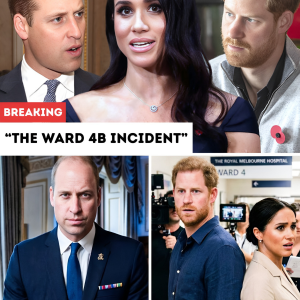
On the first day of their Melbourne itinerary, the couple visited several high-profile locations, including the Royal Children’s Hospital (RCH) and the Australian National Veterans’ Art Museum. The visit to the RCH was particularly symbolic, as it mirrored a famous visit made by Princess Diana in 1985.
Inside the wards, the interactions appeared genuinely warm. The couple spent considerable time with patients and their families, participating in the traditional rituals of such visits: handshakes, shared stories, and the acceptance of handmade gifts. One particularly moving moment involved 12-year-old patient Novalie Morris.
“I gave Harry flowers and he said ‘thank you’ and he told me to ‘keep on being brave.’ It cheered me up a lot and I’ll keep thinking about that,” Novalie shared with local reporters.
The Duchess also made headlines for her informal approach to her status. When addressed by her formal title by a staff member, she reportedly responded with a smile, saying, “Call me Meg.” While supporters viewed this as a sign of her down-to-earth nature, detractors saw it as a calculated move to appear accessible for the cameras.
For the Sussexes, these comparisons are a double-edged sword. To maintain their global profile, they must engage in high-impact, visually appealing humanitarian work. However, by doing so, they inevitably invite comparisons to the very institution they stepped away from. Critics argue that by continuing to use their titles while engaging in commercial-adjacent travel, they are “mining” royal history for contemporary profit.

The Strategic Conflict: Private Funding vs. Public Image
The self-funded nature of the trip was intended to provide the couple with autonomy, yet it has become a central point of the debate. Because the visit is not “official,” the couple has had to hire an extensive private security detail, reportedly costing upwards of $100,000 for the duration of the stay.
This logistical reality has led to questions about the sustainability of their model. If a trip is “private,” but requires the same level of security and media management as a “state visit,” the line between public service and private promotion becomes increasingly blurred.

The Australian Context: A Shift in Sentiment
Australia has historically been a stronghold of support for the Sussexes. Their 2018 tour was the moment their global popularity peaked. However, the 2026 visit suggests that the “honeymoon period” has ended. Local media coverage has been more inquisitive, focusing on the lack of transparency regarding their commercial tie-ins and the “distraction” caused by their arrival during a busy period for the Australian government.
The “online noise” reflects a broader fatigue with the ongoing drama surrounding the family. While the individual interactions—like the one with young Novalie—remain positive, the overarching narrative is dominated by the conflict between the couple and the “Firm” back in London.
The question for the Sussexes as they look toward the remainder of 2026 is whether they can establish a visual and professional identity that is uniquely their own—one that doesn’t rely on the echoes of the past or the imitation of their contemporaries. Until they find that balance, their humanitarian efforts will likely continue to be overshadowed by the debate over their optics and the persistent, critical “noise” of the internet.
The “humanitarian mask,” as some have called it, is being tested. For the brand to survive, it must eventually move beyond the “royal” shorthand and prove its value on its own merits, away from the shadow of the Crown.