There are certain moments in country music history when a familiar song is reborn in a completely new voice. One of those unforgettable moments came when Conway Twitty took the beloved pop ballad The Rose and transformed it into a deeply emotional country masterpiece. Originally recorded by Bette Midler in 1979, the song already carried a reputation as one of the most poetic reflections on love ever written. Yet when Conway Twitty released his version in the early 1980s, he did something remarkable he made the song feel as if it had always belonged to country music.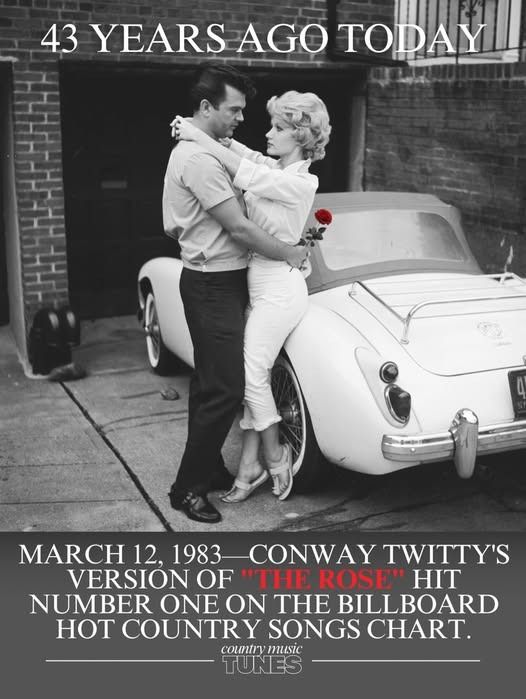
By the time Conway Twitty recorded The Rose, he was already a towering figure in the genre. With a voice that could glide effortlessly between tenderness and strength, Twitty had built a reputation for delivering songs that spoke directly to the hearts of everyday listeners. His interpretation of The Rose appeared on his 1982 album Dream Maker, and it quickly became something special. The single soared to the top of the country charts, marking the astonishing milestone of his 30th No 1 hit a testament to both his consistency and his unmatched connection with fans.
But what truly captured audiences was not just the song itself it was the way Conway Twitty began it.
Instead of immediately singing the melody, he opened The Rose with spoken words delivered in that warm, intimate tone that only he could achieve. It felt less like a performance and more like a quiet conversation shared between two people who understood the deeper meanings of love. When listeners first heard the opening line softly spoken
“Some say love it is a river that drowns the tender reed”
something magical happened. The words didn’t simply introduce the song they set the emotional stage for everything that followed. Twitty’s voice carried the wisdom of experience, the kind that comes from years of living, loving, and understanding both joy and heartbreak.
That spoken introduction became one of the most memorable openings in country music. Fans often describe the moment as feeling almost cinematic as though Conway Twitty had stepped closer to the listener and whispered a truth about life itself. It was a bold artistic choice, but it worked beautifully, adding an extra layer of intimacy that elevated The Rose beyond a simple cover version.
Musically, Twitty’s arrangement wrapped the song in gentle country instrumentation soft steel guitar, warm piano, and subtle background harmonies that allowed his voice to remain the centerpiece. Rather than overpowering the song, the arrangement gave space for the lyrics to breathe, reminding listeners that The Rose is ultimately a meditation on hope and resilience.
For longtime fans of Conway Twitty, this recording represents more than another chart-topping success. It reflects the maturity of an artist who understood that the most powerful performances are often the quietest ones. In The Rose, he didn’t need dramatic vocal fireworks or elaborate production. His voice alone carried the emotional weight.
Decades later, the recording still sends chills through listeners. The opening spoken line, the gentle rise of the melody, and the sincerity of Twitty’s delivery combine to create a performance that feels timeless. In many ways, Conway Twitty proved that a great song does not belong to just one era or one genre it belongs to the artists who understand its heart.
And on that beautiful day when The Rose reached the top of the charts once again, Conway Twitty reminded the world why his voice remains one of the most beloved in country music history.
