Why “Sixteen Tons” Still Hits Like a Hard Truth 70 Years Later
Some songs become hits because they are catchy. Some last because they are beautiful. But “Sixteen Tons” endured for a different reason. It sounded like truth.
When Tennessee Ernie Ford recorded the song in 1955, he did not dress it up with a grand performance or bury it under noise. He gave it a steady pulse, a dark calm, and that unforgettable finger snap. The result felt plain at first. Then it felt heavy. Then it felt impossible to forget.
Within months, millions of people had bought the record. That kind of success can make a song look polished in hindsight, as if it were always destined to become a phenomenon. But the power of “Sixteen Tons” began much earlier, in the world that shaped Merle Travis.
A Song Born From Real Working-Class Memory
Merle Travis wrote “Sixteen Tons” from stories that came out of Kentucky coal country. Merle Travis was the son of a coal miner, and the song carried the voices of men who knew what it meant to work until the body gave out while debt still waited at the door. That is why the lyrics never sound invented. Even now, they feel overheard rather than written.
There is nothing fancy about the central idea. Work all day. Grow older. Fall further behind. Owe more than you can ever quite repay. In a few lines, Merle Travis captured something larger than one mine or one town. He captured the quiet humiliation of labor without freedom.
That was the genius of the song. It was specific enough to feel real and broad enough to belong to millions of people who had never seen a coal shaft in their lives. Factory workers heard it. Farmers heard it. Clerks, drivers, mechanics, mothers, fathers, anyone who had ever felt trapped by the bargain between effort and survival heard themselves in it.
Why Tennessee Ernie Ford Made It Famous
Merle Travis gave the song its bones, but Tennessee Ernie Ford gave it a voice that reached everywhere. Tennessee Ernie Ford did not sing “Sixteen Tons” like a protest anthem. Tennessee Ernie Ford sang it with restraint, which made it even stronger. The darkness stayed controlled. The humor stayed dry. The pain stayed close to the chest.
That choice mattered.
If Tennessee Ernie Ford had pushed too hard, the song might have felt theatrical. Instead, Tennessee Ernie Ford sounded like a man who already understood the cost of keeping his dignity. The line about getting “another day older and deeper in debt” did not arrive like a performance trick. It landed like a fact.
That is why the recording crossed genres and audiences. It was country, but it was also pop. It belonged to the radio, but it also belonged to the kitchen table, the night shift, the long drive home, and the private silence after a hard week.
When Merle Travis and Tennessee Ernie Ford Shared the Stage
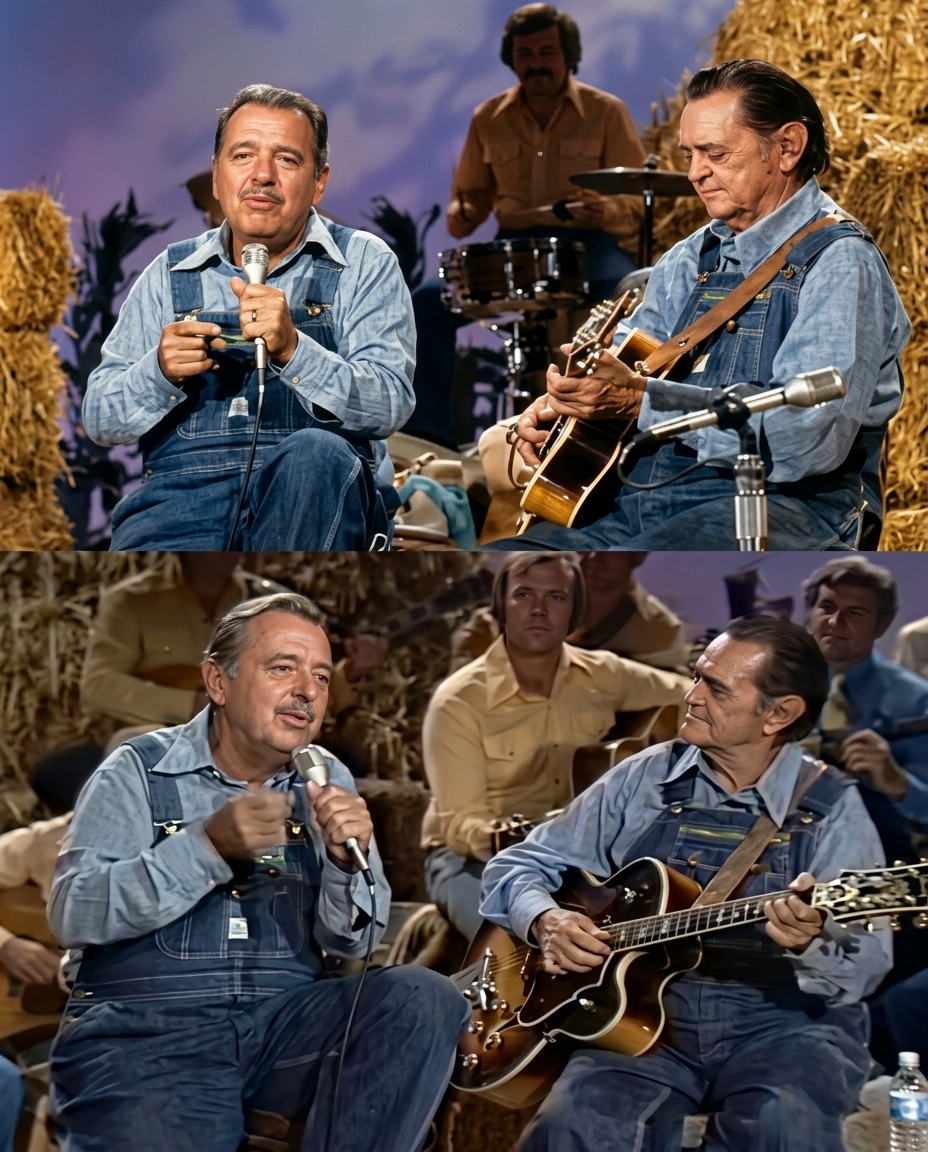
More than two decades after the song first shook the culture, Merle Travis and Tennessee Ernie Ford finally stood together and sang it on the same stage in 1977. By then, the song already carried history with it. But seeing the songwriter and the voice most people knew best share that moment gave the song a new kind of gravity.
It did not feel like nostalgia. It felt like recognition.
One man had lived close to the world that inspired the song. The other had carried it into homes around the country. When they met in that performance, “Sixteen Tons” no longer belonged to one singer or one decade. It belonged to the workers, the families, and the memories that had kept it alive.
Some songs entertain. “Sixteen Tons” remembers.
Why It Still Echoes Today
Seventy years later, the snap is still there. So is the ache. People still return to “Sixteen Tons” because the song understands something modern life has never fully solved: the feeling of giving everything you have and still being told it is not enough.
That is why the record continues to travel across generations. Younger listeners hear a classic. Older listeners hear a lifetime. And somewhere in between, the song keeps doing what it has always done. It turns labor into memory, memory into music, and music into something that refuses to disappear.
Tennessee Ernie Ford made “Sixteen Tons” famous. Merle Travis made it true. Put those two facts together, and the mystery disappears. Millions could not stop playing it then because it felt honest. People still cannot let it go now for the very same reason.