Public Debate Intensifies: Nicholas Kaufman Addresses the International Criminal Court Regarding the Philippine National Police’s Use of the Term “Neutralize”
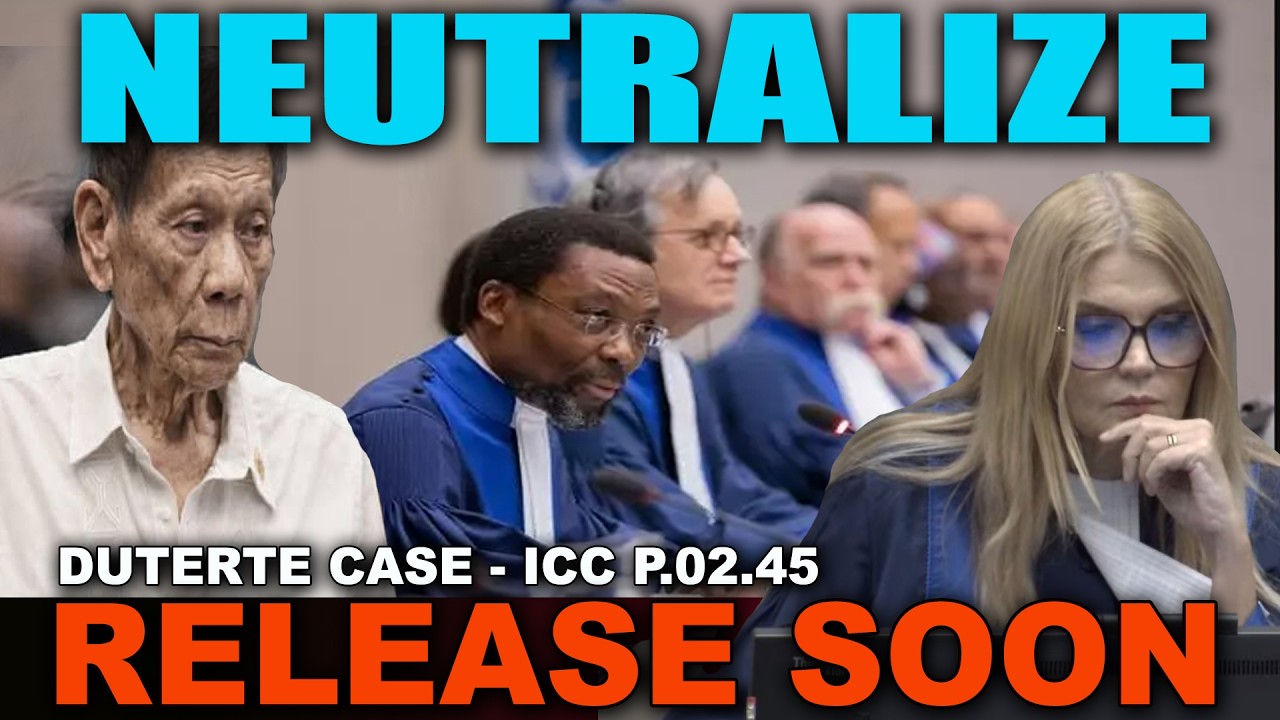
In recent months, discussions surrounding law enforcement language and accountability have become a prominent topic both within the Philippines and on the international stage. One particular word—“neutralize”—has drawn significant attention after it was discussed during proceedings connected to the International Criminal Court (ICC). The debate gained additional momentum when international lawyer Nicholas Kaufman addressed the issue during legal arguments, focusing on how the term has been interpreted in relation to operations conducted by the Philippine National Police (PNP).
The controversy surrounding this single word illustrates how language can influence public perception, legal interpretation, and political debate. While law enforcement agencies around the world often rely on specialized terminology, critics argue that certain expressions may lead to misunderstandings if they are not clearly defined. Supporters of the police, on the other hand, maintain that operational language is commonly used within security institutions and should be interpreted within its proper context.
The discussion has therefore expanded beyond a simple linguistic question. It now touches on broader themes such as legal accountability, international cooperation, and the evolving relationship between national law enforcement institutions and global judicial bodies.
The Background of the Debate
The Philippines has experienced intense public discussion over law enforcement practices for several years. These conversations often involve balancing two important goals: ensuring public safety while maintaining respect for legal standards and human rights.
The issue gained international attention when the International Criminal Court began examining certain aspects of law enforcement operations related to national anti-crime efforts. As part of this process, legal experts from different sides presented arguments concerning the interpretation of official statements, police reports, and operational terminology.
During these proceedings, lawyer Nicholas Kaufman addressed the court and discussed how the term “neutralize” has been used in official documents and public statements by the Philippine National Police. According to Kaufman, understanding the meaning of such terminology is essential for evaluating the intent behind law enforcement actions.
This argument sparked renewed debate in both political and legal circles, as observers considered whether the word’s meaning had been interpreted differently by various groups.
Understanding Law Enforcement Terminology
Specialized terminology is common in many professions, particularly in areas such as medicine, law, and security operations. Within law enforcement agencies, certain words are used to describe operational objectives, tactical outcomes, or procedural results.
The term “neutralize,” for example, has historically appeared in security contexts around the world. In some cases, it may refer broadly to stopping a threat, preventing further activity, or resolving a situation so that it no longer poses danger.
However, because such words can carry multiple interpretations, they sometimes become the focus of debate when examined outside their original context. Critics argue that ambiguous language may create confusion about what actually occurred during specific operations.
Supporters of law enforcement institutions respond by emphasizing that operational terminology must be interpreted within the framework of official procedures and legal guidelines.
In the Philippine case, the conversation about the word “neutralize” has therefore become a broader discussion about transparency and clarity in official reporting.
Nicholas Kaufman’s Presentation to the Court
During his remarks before the International Criminal Court, Nicholas Kaufman emphasized the importance of analyzing terminology carefully. His presentation focused on how certain words may appear in police documentation and public communication without necessarily reflecting a single fixed interpretation.
Kaufman argued that the legal process requires precise examination of context. According to his position, the meaning of a term cannot be assumed solely based on its wording; instead, it must be evaluated in relation to the circumstances surrounding each individual incident.
Legal analysts observing the proceedings noted that this type of argument is common in international law. Lawyers frequently examine language in detail because even small differences in wording can influence how events are interpreted in court.
By highlighting the complexities of the term “neutralize,” Kaufman sought to demonstrate that language used in official reports should not be interpreted without careful consideration of its operational meaning.
Reactions Within the Philippines
News of the courtroom discussion quickly reached the Philippines, where it sparked strong interest among legal experts, political commentators, and members of the public.
Some observers welcomed the debate, seeing it as an opportunity to clarify how law enforcement terminology is used in official communication. They argued that transparency can help strengthen trust between institutions and the public.
Others expressed concern that the discussion might oversimplify complex situations faced by police officers working in challenging environments. From this perspective, operational decisions often occur under intense pressure, making it difficult to describe events using perfectly precise language.
Public reactions reflected the diversity of opinion within Philippine society. While some individuals called for clearer definitions in official reports, others emphasized the importance of supporting institutions responsible for maintaining public safety.

Political Implications of the Debate
The controversy surrounding the term “neutralize” has also entered the political arena. Legislators, analysts, and public figures have begun discussing whether clearer guidelines should be established for how law enforcement agencies communicate about their operations.
In democratic systems, language used by public institutions carries significant weight. Official statements often shape how citizens understand government actions and evaluate the performance of authorities.
As a result, some policymakers have suggested that standardizing certain terms could reduce misunderstandings in the future. Clear definitions could help ensure that both domestic audiences and international observers interpret official reports consistently.
At the same time, others caution that excessive regulation of language might complicate operational reporting for law enforcement agencies. Achieving the right balance between clarity and practicality therefore remains an ongoing challenge.
International Legal Perspectives
The involvement of the International Criminal Court adds another layer of complexity to the debate. The ICC operates as an international institution that examines cases involving serious legal questions under global law.
When national institutions interact with international courts, differences in terminology and legal traditions can sometimes create confusion. Words that carry one meaning in a domestic context may be interpreted differently in an international legal framework.
For this reason, legal experts participating in ICC proceedings often spend considerable time explaining the context behind official documents and statements.
Nicholas Kaufman’s discussion of the term “neutralize” reflects this broader process of clarification. By examining the language used in police reports, lawyers attempt to ensure that the court fully understands how those reports were originally intended.
The Role of Media and Public Discussion
Media coverage has played a crucial role in bringing the debate to a wider audience. News organizations and commentators have reported on the courtroom discussion, explaining its potential implications for both Philippine law enforcement and international legal proceedings.
However, the spread of information through social media has also introduced challenges. Online discussions sometimes simplify complex legal arguments into short headlines or brief posts, which can lead to misunderstandings.
Responsible journalism therefore remains essential in presenting balanced and accurate explanations of legal developments. By providing context and multiple perspectives, journalists help the public understand the significance of issues such as the interpretation of law enforcement terminology.
Transparency and Institutional Trust
At its core, the controversy surrounding the word “neutralize” reflects a broader conversation about transparency and trust in public institutions.
Citizens expect clear and accurate information from the agencies responsible for maintaining order and safety. When questions arise about how official language is used, addressing those concerns openly can help strengthen public confidence.
For law enforcement organizations like the Philippine National Police, clear communication plays an important role in maintaining legitimacy. By explaining operational procedures and terminology, institutions can demonstrate their commitment to accountability and professionalism.
Similarly, legal processes at the international level aim to ensure that all parties have the opportunity to present their interpretations and evidence in a structured and impartial environment.
Lessons from the Ongoing Discussion
The debate sparked by Nicholas Kaufman’s presentation offers several lessons about the relationship between language, law, and public perception.
First, it illustrates how a single word can carry significant implications when examined within a legal context. Even terms that appear straightforward may require careful analysis when used in official documentation.
Second, the discussion highlights the importance of dialogue between national institutions and international organizations. By engaging in transparent legal proceedings, both sides can clarify misunderstandings and strengthen cooperation.
Finally, the episode demonstrates the role of public engagement in democratic societies. When citizens actively follow legal and political developments, they contribute to a culture of accountability and informed debate.
Looking Toward the Future
As proceedings at the International Criminal Court continue, the discussion surrounding law enforcement terminology will likely remain part of broader conversations about governance and justice.
Legal experts, policymakers, and civil society organizations may continue examining how official language can be improved to ensure clarity and transparency.
For the Philippine National Police, the debate could provide an opportunity to review communication practices and strengthen public understanding of operational procedures.
Meanwhile, international legal institutions will continue evaluating evidence and arguments presented by all parties involved.
Conclusion
The public attention surrounding Nicholas Kaufman and his discussion of the term “neutralize” before the International Criminal Court demonstrates how language can become a focal point in complex legal and political debates.
What began as an examination of a single word has expanded into a broader conversation about transparency, accountability, and the interpretation of law enforcement terminology.
Within the Philippines, the debate has encouraged reflection on how institutions communicate with the public and how legal processes operate at both national and international levels.
Ultimately, the significance of the discussion lies not only in the meaning of one particular term but also in the ongoing effort to ensure that governance, law enforcement, and legal institutions operate with clarity, responsibility, and respect for the rule of law.
As the conversation continues, it serves as a reminder that words matter—especially when they appear in official reports, legal arguments, and public discourse. Through careful analysis and open dialogue, societies can move closer to a shared understanding of how language shapes the pursuit of justice and accountability.
