Introduction
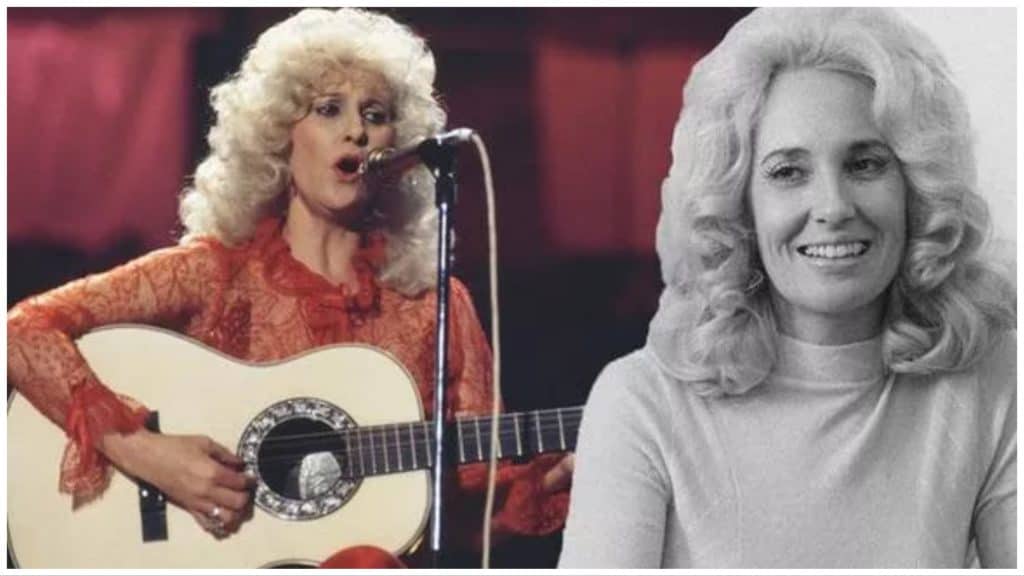
In the history of American country music, few voices have carried as much emotional weight as Tammy Wynette. Known widely as the First Lady of country music, her songs gave shape to the struggles, heartbreak, and quiet endurance of a generation of women. Yet the sorrow in her voice was never an act. It was drawn directly from a life marked by hardship, fragile love, and a relentless determination to survive against the odds.
Born as Virginia Wynette Pugh in 1942, her life began under the shadow of loss. Her father, a farmer and amateur musician, died of a brain tumor when she was only nine months old. What he left behind was not wealth or security, but a collection of musical instruments that would later become her only inheritance and her escape. Raised by her grandparents on a rural Mississippi farm without indoor plumbing, Wynette grew up surrounded by poverty and silence. In that silence, she taught herself to play the guitar, her fingers discovering melodies shaped by hardship.
Her dream of becoming a singer seemed distant and almost impossible. At seventeen, she married Euple Byrd, but the marriage quickly revealed itself as a barrier to her ambitions. When she chose to leave, determined to build a life for her children, she faced ridicule instead of support.
“Dream on, baby,” he reportedly told her.
What was meant as a dismissal became a defining moment. The words did not discourage her. Instead, they fueled a resolve that would carry her through years of struggle.
Wynette worked tirelessly to support her three daughters. She took on multiple jobs including waitressing, working in a shoe factory, and practicing as a hairdresser. Even as she pursued music, she never allowed her cosmetology license to expire. It stood as a reminder of the life she might have to return to if her dream failed. In 1966, she made a bold decision to move to Nashville, taking what she saw as her final chance to transform talent into a career.
After facing repeated rejection, she walked into the office of producer Billy Sherrill at Epic Records. He hesitated at first, uncertain about her potential. Yet there was something undeniable in her voice, a raw and authentic pain that could not be manufactured. He signed her, gave her the name Tammy Wynette, and quickly helped shape a new era in country music. Songs like Your Good Girl’s Gonna Go Bad and the Grammy winning I Don’t Wanna Play House turned her into a defining voice of devotion and emotional endurance.
Her rise to fame was rapid, but it came with an equally intense personal life. In 1969, she married George Jones, a country legend known as much for his talent as for his volatility. Together, they became country music royalty, often referred to as the President and the First Lady. Their duets such as We’re Gonna Hold On and Golden Ring captured a relationship filled with passion and instability. The music reflected their reality, blurring the line between performance and personal truth.
Their six year marriage unfolded in public view, marked by separation, reconciliation, and Jones’s ongoing struggle with alcohol. Even after their divorce, they continued to perform together, a testament to a connection that could neither fully survive nor completely end. Their story became one of the most complex love narratives in the genre, celebrated in music while exacting a heavy personal cost.
Wynette’s life continued to attract headlines, often for reasons beyond her music. In 1978, she reported a terrifying kidnapping, claiming she had been abducted at gunpoint and physically assaulted. Years later, her daughter Jackie Daly challenged the story, suggesting it had been fabricated to conceal abuse by her fifth husband, George Richey. The truth has remained uncertain, adding another layer of mystery to an already complicated life.
Throughout these events, her health steadily declined. She underwent numerous major surgeries and became dependent on pain medication. Despite these challenges, she confronted her struggles openly, even seeking treatment at the Betty Ford Center. Her resilience was evident not only in her music but in her willingness to face personal battles in public view.
Her cultural influence extended beyond music into the broader public conversation. In 1992, a remark by Hillary Clinton during a televised interview sparked national controversy. Attempting to distinguish her own identity, Clinton stated that she was not a woman who stood by her man like Tammy Wynette. The comment was widely interpreted as dismissive of Wynette’s image and message.
“With all that is in me, I resent the implication that I am some kind of submissive woman,” Wynette wrote in response.
The reaction was immediate and intense. For many, Wynette represented not weakness but resilience and sacrifice. Clinton later issued a personal apology, acknowledging the unintended impact of her words. The episode reinforced Wynette’s status as more than a singer. She had become a symbol embedded in the cultural fabric of the nation.
Even as her health worsened, Wynette continued to record and perform. Her voice, though weathered, retained its emotional power. She collaborated with artists across genres, including Elton John and The KLF. In 1993, she joined Dolly Parton and Loretta Lynn on the album Honky Tonk Angels, a project that brought together three defining voices of country music.
On April 6, 1998, at the age of fifty five, Tammy Wynette died in her sleep due to a blood clot. Her passing marked the end of a life that had been both celebrated and scrutinized. Yet her legacy remains deeply rooted in the emotional honesty of her music.
The story of Tammy Wynette is not simply one of fame or tragedy. It is a narrative shaped by endurance, marked by contradictions, and defined by a voice that turned personal pain into universal expression. Through her songs, she did more than stand by anyone. She stood for something, leaving behind a body of work that continues to resonate with listeners who recognize their own struggles within her voice.