Introduction
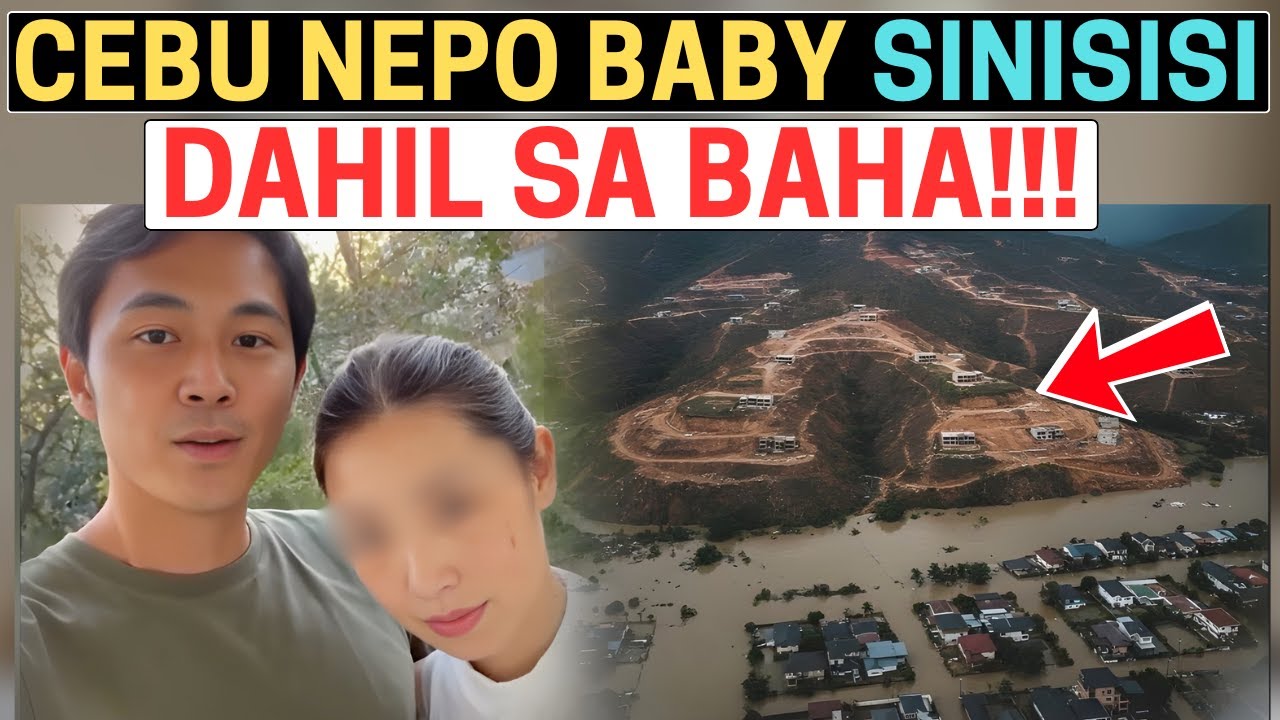
This is no ordinary flood report. In the midst of heavy rains and flooding in Cebu due to Typhoon Tino, another controversy has erupted — not only because of the destruction of homes and lives lost, but also because of the direct focus on a high-end real estate project. It has been called a sign of deep problems in urban development, land allotment, and environmental protection. The main focus is now on the project of Slater Young, a well-known personality in the showbiz and real estate scene, who is now facing severe criticism.
I. Typhoon Tino and the Cebu Flood
On the first day of November 2025, Typhoon Tino crossed the Philippine Area of Responsibility and rapidly increased rainfall in the Visayas region. Within a few hours, floods gradually erupted in Cebu City, the province of Negros Oriental, and other neighboring provinces. In Barangay Guadalupe, Cebu City above the ridge, residents were covered in “brown-colored” water mixed with mud and debris.
Houses that previously did not flood are now submerged up to the roof. The floodwaters are floating cars and mud and cement from damaged walls and foundations are even reaching the streets. Many have been displaced. Many have died—and the question now is: Why did this happen?
II. Slater Young’s Favorite Project: “Rise at Monterrazas”
Slater Young, once known as an actor and Grand Winner of a reality show, also served as a civil engineer and real estate entrepreneur. In August 2023, he introduced his project “The Rise at Monterrazas” in Barangay Guadalupe, Cebu City—a “terras” or staircase-style condominium that is said to be inspired by the Banaue Rice Terraces in Ifugao.
According to him, the design was solidified while considering sustainability: there is rain-water collection, drip irrigation, and retaining ponds for rainwater. But despite the window of hope, in the midst of floods and tragedy, the project that was once hailed as “innovative” has become a symbol of anger.
III. Public Outrage: Blame the Project?
Soon, posts from residents and netizens spread on social media, saying that since the project began on the side of the mountain, the flow of water gushing down into the communities below it seemed to gradually increase. Several Reddit users wrote:
“When you cut trees because of real estate dev, one thing for sure some of the rain water from the mountains will flow down to the city…”
“From November 2-6, Tino made multiple landfalls… Barangay Guadalupe flooding reached waist-deep levels… Communities that had never experienced flooding before were suddenly submerged.”
The question is: Is it possible that this project actually caused the flood? Or is it just misdirected rage due to a terrible tragedy?
IV. Government to Investigate
On November 7, 2025, the Department of Environment and Natural Resources (DENR) announced the conduct of a comprehensive investigation into the Slater Young project. This will involve technical experts from the EMB, MGB, the local government of Cebu, and Barangay Guadalupe. Their goal is to determine if there is a violation of the Environmental Compliance Certificate (ECC), if the drainage, slope protection, and runoff management of the project are in order.
In conjunction with this, the Department of Public Works and Highways (DPWH) said they are also reviewing the entire flood control system in Cebu from 2016–2025, identifying possible ghost projects and substandard flood control constructions.
V. What is Slater Young Saying?
In a 2023 interview, Slater said he wouldn’t put his name on a project if he didn’t believe in it. He pointed out that the site was previously shrubland and not “forest,” and claimed that the project had soil tests, geotechnical studies and over 300 design revisions.
But in the midst of the tragedy, he remained silent and has yet to make a new public statement. What many cannot accept: if there is such a big project on the mountain, why is it continuing?
VI. Lessons and Questions for the Nation
The Cebu incident is more than a local tragedy; it serves as a warning sign for urban development in the Philippines. Some of the important questions that surfaced:
When did it become right to build on the side of a mountain that could potentially be used to store rainwater?
Where did the billions in flood control funds go if widespread flooding continues?
What is the responsibility of the developer, the government, and the community when widespread damage occurs?
Many have called for the investigation not just to find blame, but to provide justice to those who died and were lost, and to prevent this type of tragedy from happening again.
Conclusion
In the face of pain and flooding, many yearn for answers—answers that are not just for their destruction, but for their recovery. As the DENR pursues the truth behind Slater Young’s project, one question remains in the hearts of Cebuanos: Will there be honest and transparent compliance with the law, or will silence remain amidst a few rumors and tears from those affected?
Ultimately, the real challenge is not just who is at fault, but how to keep our nation safe—especially as our world continues to face greater challenges in terms of nature and urbanization.
