LEGAL SHOCKWAVE: QUESTIONS, STANDARDS, AND THE COMPLEX WORLD OF INTERNATIONAL WITNESS SELECTION
A fresh wave of discussion has emerged in legal and public circles following reports that Kaufman has raised pointed questions about the acceptance of self-proclaimed past offenders as “star witnesses” in proceedings connected to the International Criminal Court. The development has ignited intense debate about how witnesses are selected, evaluated, and presented in complex international cases—and whether there may be intricate, undisclosed considerations guiding those decisions.
At the center of the discussion is a principle that lies at the heart of many judicial systems: credibility. In any court, whether domestic or international, testimony can shape narratives, influence interpretation of events, and ultimately affect outcomes. When individuals who acknowledge involvement in prior misconduct step forward as key witnesses, questions naturally arise about reliability, motivation, and evidentiary balance.

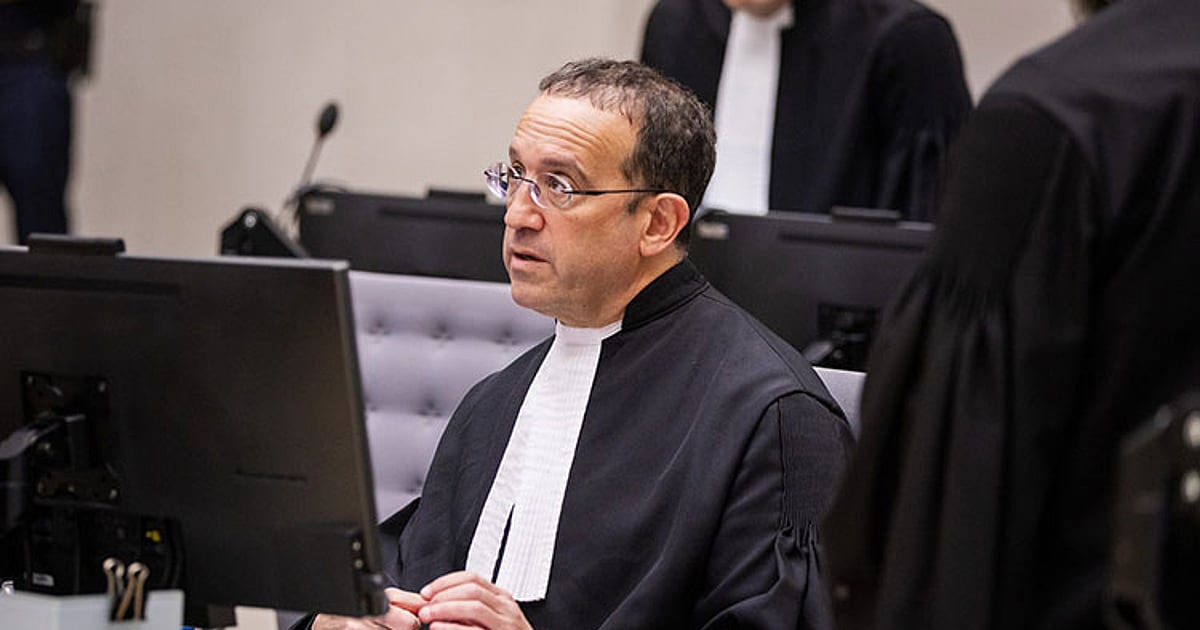
Kaufman’s reported stance has been described as firm but measured. According to observers, he is not simply challenging individuals personally, but rather the broader criteria by which they are elevated to central roles in legal proceedings. His remarks have prompted reflection on how international tribunals navigate the delicate balance between accessing insider information and maintaining the highest standards of fairness.
International courts often deal with situations that are uniquely complex. Unlike local cases, they may involve events spanning years, multiple jurisdictions, and intricate chains of command. In such contexts, those who once participated in controversial or questionable activities may be among the few individuals capable of providing detailed, firsthand accounts. This reality creates an inherent tension: how to obtain crucial information without compromising credibility.
Legal scholars point out that testimony from individuals who have admitted to past involvement in wrongdoing is not uncommon in judicial systems worldwide. In many jurisdictions, cooperating witnesses play a role in uncovering larger patterns or clarifying disputed timelines. However, their participation is usually accompanied by rigorous vetting procedures, corroboration requirements, and careful cross-examination.
The debate sparked by Kaufman’s reported comments centers on whether these safeguards are sufficiently robust within the ICC framework. Critics argue that when a witness’s background includes admitted misconduct, the threshold for verification should be particularly high. Supporters counter that excluding such individuals outright could deprive courts of essential insights.
The ICC operates under a detailed set of procedural rules designed to protect fairness and impartiality. Judges assess admissibility, relevance, and probative value. Witness credibility is weighed alongside documentary evidence, expert testimony, and contextual information. Decisions are not based solely on one narrative but on the cumulative strength of multiple sources.
Still, public perception can diverge from procedural nuance. When headlines describe “star witnesses” with controversial pasts, audiences may interpret this as favoritism or selective judgment. The term itself carries symbolic weight, suggesting prominence or influence.
Kaufman’s reported questioning appears to focus on transparency—specifically, whether the reasoning behind witness selection is sufficiently clear to observers. Transparency is a cornerstone of public trust in international institutions. Even when decisions are legally sound, insufficient communication can lead to misunderstanding.
Observers have noted that international tribunals face practical challenges distinct from domestic courts. Gathering evidence across borders, ensuring witness safety, and navigating diplomatic sensitivities require careful coordination. In some situations, those willing to testify may do so at considerable personal risk.
This complexity complicates public assessment. What may appear straightforward from a distance often involves layers of logistical, legal, and ethical consideration.
The phrase “self-proclaimed past offenders” adds another dimension. Admission of past misconduct can signal accountability, but it can also raise concerns about incentive structures. Are witnesses motivated by a desire to clarify events, by personal interest, or by negotiated arrangements? Courts typically address such questions through disclosure requirements and cross-examination.
Legal analysts emphasize that credibility is rarely binary. A witness may have participated in questionable activities yet still provide accurate information about broader contexts. Conversely, a seemingly unblemished background does not guarantee reliability.
The broader debate touches on philosophical questions about justice. Should courts prioritize access to insider testimony even if it comes from imperfect sources? Or should they maintain stricter boundaries to protect perceived integrity?
International legal history provides examples of both approaches. Various tribunals have relied on cooperating insiders to unravel complex cases, while simultaneously implementing safeguards to mitigate potential bias. These safeguards can include corroboration by independent evidence, detailed judicial reasoning in written decisions, and opportunities for defense teams to challenge credibility.
Kaufman’s reported intervention has drawn attention to these mechanisms. Some commentators argue that his questions serve a constructive purpose, encouraging clarification and reinforcing procedural rigor. Others caution that framing the issue too dramatically risks undermining confidence in ongoing proceedings without concrete evidence of procedural flaw.
Public discourse has intensified partly because international courts operate in a global spotlight. Unlike local trials, their decisions can influence diplomatic relations and historical narratives. As a result, scrutiny tends to be amplified.
Supporters of the ICC note that its judicial panels are composed of experienced legal professionals from diverse backgrounds. They emphasize that decisions about witness participation are not made lightly and are subject to established evidentiary standards.
Critics, however, argue that transparency must extend beyond internal assurance. They call for clearer public explanations regarding how credibility assessments are conducted and what thresholds are applied.
In response to similar debates in the past, international courts have sometimes released detailed summaries explaining their reasoning. Such documentation can help demystify complex decisions and demonstrate adherence to procedural safeguards.
The current discussion illustrates how legal processes intersect with public perception. Even when procedures are technically sound, communication gaps can create uncertainty.
It is also important to recognize that questioning procedural choices is not inherently adversarial. Legal systems are strengthened by robust debate. When attorneys raise concerns about fairness or consistency, they contribute to ongoing refinement of institutional practice.
The notion of “undisclosed factors” has gained traction in online conversations. Yet without concrete evidence, speculation can overshadow substantive analysis. International courts are bound by written statutes and regulations; deviations from these frameworks would likely generate formal review.
Observers familiar with ICC practice note that witness selection often involves consultation among prosecution teams, legal advisors, and judicial officers. Decisions are documented in filings and can be subject to challenge.
Kaufman’s reported remarks may prompt further clarification in future sessions. Courts sometimes respond to public debate by elaborating on procedural reasoning in written decisions.
Ultimately, the issue underscores a broader truth: international justice operates in an environment of complexity. Accessing accurate information in cases involving extensive timelines and multiple actors is rarely straightforward.
Balancing inclusivity of testimony with stringent credibility standards requires continuous calibration. Too narrow an approach risks losing vital perspectives; too broad an approach risks perception of imbalance.
The debate unfolding now reflects the dynamic nature of international legal systems. Institutions evolve through critique, review, and adaptation.
For the public, the key lies in distinguishing between procedural questioning and definitive conclusions. Raising questions about witness criteria does not necessarily imply systemic weakness. It may instead signal engagement with the ongoing refinement of judicial practice.
In the months ahead, further documentation and clarification may emerge, offering deeper insight into how decisions were reached. Until then, measured analysis remains essential.
Legal shockwaves often reverberate most strongly in the realm of perception. Yet within courtrooms, deliberation tends to proceed with steady focus on evidence, statute, and precedent.
Whether this current debate leads to procedural adjustment, enhanced transparency, or simply renewed understanding of existing safeguards, it highlights the importance of open dialogue.
In international justice, credibility is both a legal concept and a public expectation. Navigating the space between them requires patience, clarity, and respect for process.
As discussions continue, observers are reminded that the strength of any legal institution lies not in the absence of questioning—but in its capacity to address questions thoughtfully and transparently.
In that capacity, even controversy can serve a constructive role, reinforcing the foundational principles of fairness and accountability that international courts strive to uphold.
