Introduction
How did George Strait save country music?
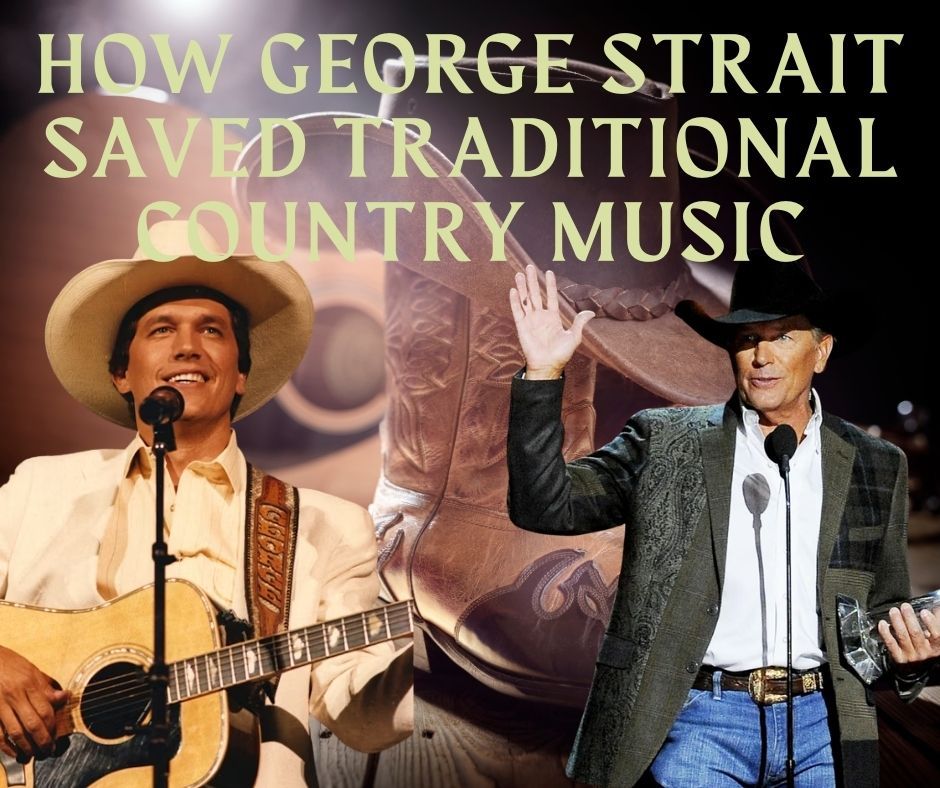
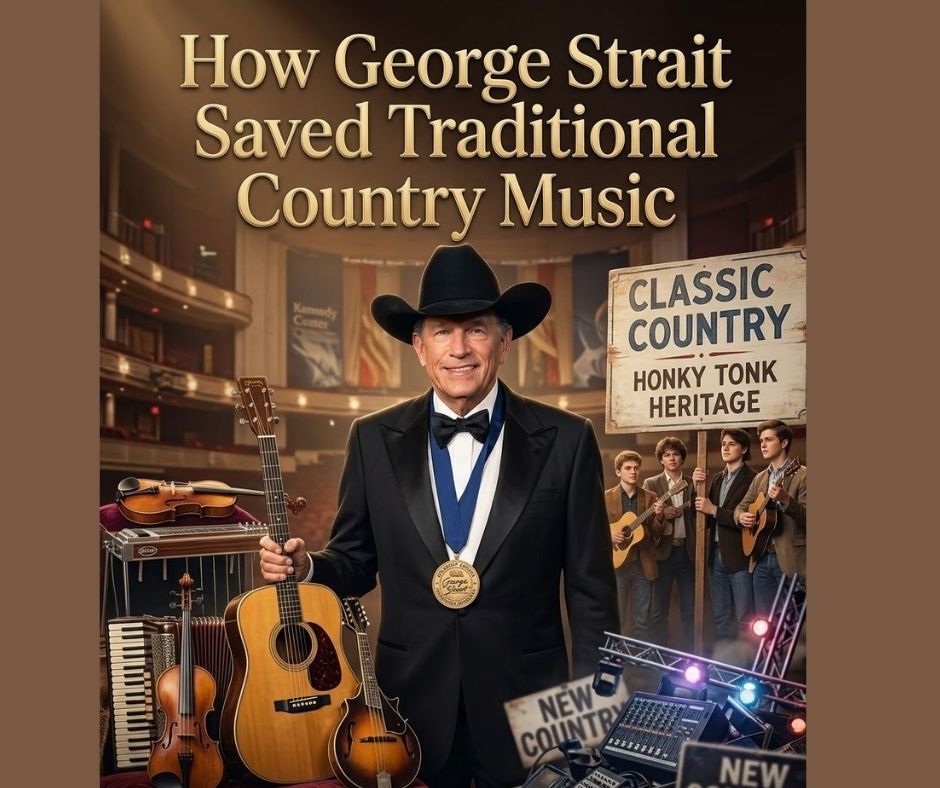
When country music drifted toward pop during the late 1970s and early 1980s, George Strait helped restore its identity. By bringing back honky-tonk rhythms, traditional storytelling, and instruments like fiddle and pedal steel guitar, he sparked the Neotraditional Country revival. This movement reshaped Nashville and reconnected country music with its roots.
Table of Contents
- The Identity Crisis in Country Music Before the 1980s
- The Urban Cowboy Era and the Backlash
- The Rise of Neotraditional Country Music
- Why George Strait’s Debut Changed Nashville
- How George Strait Brought Back Fiddle and Steel Guitar
- The 1980s Country Revival Led by George Strait
- 1980s Crisis vs 2026 Country Revival
- Influence on Modern Artists and the New Neotraditional Wave
- Why George Strait Remains the Gold Standard
- The Legacy of the Savior of Traditional Country Music
The Identity Crisis in Country Music Before the 1980s
To understand how George Strait saved traditional country music, we must first revisit the turbulent period before his rise.
During the late 1970s, country music was undergoing a dramatic transformation. Nashville producers were increasingly blending country with pop arrangements, orchestral strings, and smoother vocals.
This shift—often connected to the success of the film Urban Cowboy—created what many fans later called the Urban Cowboy era.
While the trend brought new listeners to country music, it also triggered an identity crisis.
Traditional fans felt the genre was losing its soul.
Instead of honky-tonk rhythms and working-class storytelling, the charts were dominated by polished crossover hits.
This moment in 1980s country music history would soon create the perfect conditions for a revival.
The Urban Cowboy Era and the Backlash
The Urban Cowboy boom changed how country artists looked, sounded, and were marketed.
Many performers adopted sleek pop arrangements and urban aesthetics.
Traditional instruments like fiddle and pedal steel guitar began disappearing from radio hits.
The backlash came quickly.
Listeners who loved the raw emotion of artists like Hank Williams believed country music was drifting too far from its heritage.
They wanted something authentic again.
Something that sounded like Texas dance halls instead of Hollywood soundtracks.
This cultural reaction laid the foundation for the pure country music movement.
And soon, a young Texas singer would become its most important voice.
The Rise of Neotraditional Country Music
The early 1980s marked the birth of neotraditional country music, a movement that revived the genre’s original sound.
Rather than rejecting modern recording techniques entirely, neotraditional artists combined contemporary production with classic country elements.
The movement emphasized:
- traditional country instruments
- storytelling lyrics
- honky-tonk rhythms
- Western imagery and culture
Artists like Randy Travis and Ricky Skaggs played important roles.
But the artist who most clearly embodied the movement was George Strait.
His music sounded timeless from the beginning.
Critics soon began calling him the “gold standard for traditional country.”
Why George Strait’s Debut Changed Nashville
The turning point arrived in 1981 with George Strait’s debut single Unwound.
At a time when Nashville was dominated by pop-influenced country, the song sounded radically different.
It featured:
- twangy guitars
- honky-tonk rhythm
- traditional storytelling
The track became a hit and proved something important.
Traditional country music could still succeed on mainstream radio.
Soon after, Strait released his debut album Strait Country.
The album would become a blueprint for the neotraditional country movement.
Instead of chasing pop trends, it celebrated classic country sounds.
Nashville executives began noticing the shift.
Authenticity was becoming commercially viable again.
How George Strait Brought Back Fiddle and Steel Guitar
One of the clearest ways George Strait traditional country music reshaped the genre was through instrumentation.
During the Urban Cowboy era, producers often replaced traditional instruments with synthesizers.
George Strait reversed that trend.
His recordings prominently featured:
- fiddle
- pedal steel guitar
- acoustic rhythm guitar
- Western swing influences
These instruments gave his music the warm, organic sound associated with classic country.
Songs like Amarillo by Morning and All My Ex’s Live in Texas demonstrated how powerful traditional arrangements could still be.
Listeners responded immediately.
The songs became iconic hits.
Soon, many Nashville producers began reintroducing these instruments into mainstream country records.
The 1980s Country Revival Led by George Strait
By the mid-1980s, the George Strait 1980s revival was undeniable.
His steady success proved that audiences still loved traditional country.
This success reshaped Nashville’s entire industry strategy.
Record labels began signing artists who embraced authenticity instead of pop crossover formulas.
The result was a new era of country music defined by:
- traditional storytelling
- Western culture
- honky-tonk rhythm
This shift is why many historians say George Strait saved traditional country music.
Without his success, Nashville might have continued chasing pop trends indefinitely.
Instead, the genre rediscovered its roots.
1980s Crisis vs 2026 Country Revival
Interestingly, country music in 2026 faces a situation similar to the one that existed before Strait’s rise.
Once again, the genre sits between mainstream pop experimentation and traditional authenticity.
The comparison reveals fascinating parallels.
| Criteria | 1980s Country Crisis (Urban Cowboy Era) | 2026 Country Revival (Neotraditional Wave) |
|---|---|---|
| Context | An identity crisis triggered by the Urban Cowboy trend | A reaction to the Bro-Country era and pop/trap-influenced country |
| Sound | Highly pop-oriented production with synthesizers and string arrangements | A return to traditional elements like fiddle and pedal steel guitar |
| Image | Clean-cut, Hollywood-style cowboy aesthetics | Vintage Western imagery with a rougher, dustier look |
| Key Figures | George Strait, Randy Travis, Ricky Skaggs | Zach Top, Kaitlin Butts, Sierra Ferrell |
| Distribution Channels | Radio and cinema played a major role in spreading the trend | TikTok, Spotify, and country music festivals drive the revival |
| Audience | A new urban audience discovering country music | Gen Z listeners searching for authenticity |
| Role of George Strait | The leading figure of the neotraditional revolution | The gold standard that younger artists look up to |
This comparison highlights something powerful.
The legacy of George Strait continues to shape country music decades later.
Influence on Modern Artists and the New Neotraditional Wave
Today, many rising artists openly acknowledge the influence of George Strait.
Musicians like Zach Top have embraced traditional arrangements that echo Strait’s style.
Meanwhile, modern crossover stars like Post Malone have experimented with country music inspired by its classic storytelling tradition.
These developments suggest that country music may once again be entering a neotraditional revival.
Streaming platforms and social media have amplified this trend.
On TikTok and Spotify playlists, songs featuring fiddle-driven arrangements are gaining popularity among younger listeners.
Many critics believe this resurgence reflects a deeper cultural shift.
After years of heavily produced country-pop, audiences are rediscovering the emotional power of authenticity.
Why George Strait Is the Gold Standard for Traditional Country
Even after four decades, George Strait legacy remains unmatched in country music.
He achieved:
- 60 No.1 hits on the country charts
- decades of consistent radio success
- induction into the Country Music Hall of Fame
But statistics only tell part of the story.
What truly sets Strait apart is his unwavering commitment to traditional country music.
While many artists adapted their sound to follow industry trends, Strait stayed consistent.
He continued recording music rooted in honky-tonk, Western swing, and classic storytelling.
This consistency is why fans and historians often call him the “savior of country music.”
The Legacy of the Savior of Traditional Country Music
Looking back, the importance of George Strait’s career becomes clear.
At a moment when country music risked losing its identity, he reminded audiences what made the genre special.
His music celebrated:
- working-class stories
- Western culture
- timeless melodies
The history of the neotraditional country movement cannot be told without him.
And today, as a new generation of artists rediscover the power of traditional sounds, his influence feels stronger than ever.
More than forty years after his debut, George Strait still represents the purest expression of country music’s roots.
That is why many fans believe one simple truth.
George Strait didn’t just succeed in country music.
He helped save it.
