The courtroom in The Hague was calm, procedural, almost clinical. Lawyers spoke in measured tones. Judges listened without visible reaction. Pages of documents were projected onto screens. Names were read. Dates were cited. Legal standards were invoked.
But thousands of miles away, on social media feeds pulsing with anger and loyalty, a very different atmosphere raged.
As the confirmation of charges hearing against former Philippine president Rodrigo Duterte unfolded before the International Criminal Court, his supporters launched a wave of online reactions—some pleading for his freedom, others attacking the legitimacy of the court itself, and still others directing fierce criticism at ICC judges, including Julia Motoc.
The question now being quietly asked by legal observers is unsettling: Are Duterte’s most passionate defenders inadvertently strengthening the case against him?
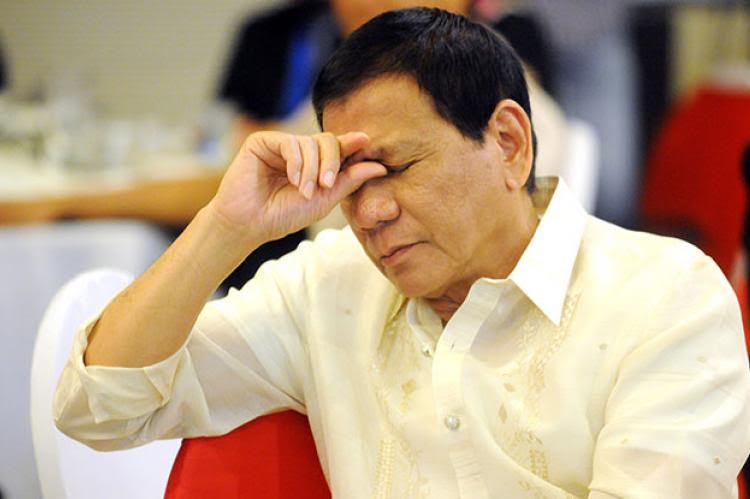
Day Two: The Prosecution’s Narrative
On the second day of the confirmation of charges hearing, ICC prosecutors laid out what they described as a structured pattern of extrajudicial killings tied to Duterte’s anti-drug campaign.
Central to their presentation was what they called the “PRRD list”—a spreadsheet allegedly identifying high-value drug targets. The prosecution argued that some names on that list corresponded to individuals later killed in police operations.
Among those mentioned were former Albuera, Leyte mayor Rolando Espinosa Sr. and Ozamiz City mayor Reynaldo Parojinog, both of whom died in controversial police operations. Prosecutors highlighted patterns in official police reports—language that appeared repeated, phrases such as “nanlaban” (fought back), and claims that weapons and drugs were recovered at crime scenes.
The prosecution contends that these similarities were not coincidence but evidence of a method.
They further alleged that rewards were paid for neutralizing high-value targets and that such payments were outside regular police budgeting channels.
Duterte has long denied ordering unlawful killings, insisting that his campaign targeted criminals and was carried out within the bounds of the law.
The confirmation of charges hearing is not yet a trial. Its purpose is to determine whether sufficient evidence exists to proceed to one.
But in cases before the ICC, perception and conduct beyond the courtroom can matter more than many realize.
The Civilian Population Argument
A key legal element emphasized by prosecutors involves the targeting of civilians.
Under the Rome Statute—the founding treaty of the ICC—crimes against humanity require proof of a widespread or systematic attack directed against a civilian population.
Prosecutors stressed that many victims came from impoverished communities, arguing that poverty made them particularly vulnerable. They were, in the prosecution’s framing, unlikely to file complaints or challenge authorities.
The victims’ legal representatives echoed this point, underscoring socioeconomic context. They argued that the pattern of killings disproportionately affected defenseless populations.
This framing is crucial. If the court accepts that a civilian population was systematically targeted, it strengthens the legal foundation for crimes against humanity.
The Online Backlash
As these arguments were presented in The Hague, Duterte’s supporters mobilized online.
Comment sections filled with slogans demanding justice in his favor. Others accused the ICC of bias, corruption, or political interference. Some directed pointed remarks at Judge Julia Motoc and other ICC officials.
To many supporters, these reactions are expressions of loyalty. Duterte, after all, remains deeply popular among segments of the Philippine electorate who credit him with decisive leadership and a crackdown on criminality.
But international law has its own ecosystem—one governed by statutes, precedents, and procedural safeguards.
And that ecosystem includes provisions addressing interference.
Article 70: Offenses Against the Administration of Justice
Under Article 70 of the Rome Statute, the ICC has jurisdiction over offenses against the administration of justice. These include corruptly influencing witnesses, obstructing proceedings, retaliating against officials, or engaging in intimidation.
Legal analysts note that while general online criticism does not automatically amount to an Article 70 violation, sustained harassment, threats, or coordinated attempts to pressure judges could potentially be scrutinized.
Moreover, the perception of a hostile environment can influence decisions about detention.
One factor ICC judges consider when deciding whether to grant temporary release pending trial is whether the accused might obstruct or endanger the proceedings—directly or indirectly.
If prosecutors argue that the political climate surrounding Duterte poses risks to witnesses or court officials, they may use public hostility as part of that argument.
In other words, even if Duterte himself is not personally directing such attacks, the environment created by aggressive supporters could become part of the broader narrative.
The Bail Question
Pre-trial detention at the ICC is not automatic but common in high-profile cases.
Judges weigh several factors:
-
Risk of flight
-
Risk of obstructing justice
-
Risk of continuing criminal conduct
If prosecutors argue that releasing Duterte could embolden supporters to intimidate witnesses or undermine proceedings, judges may view detention as necessary to protect the integrity of the trial.
Thus, supporters hoping to secure his release could inadvertently be complicating that possibility.
Political Reactions at Home
In the Philippines, political figures have responded cautiously.
Senator Bong Go, a longtime ally of Duterte, reiterated that his work in the Senate continues and declined to comment extensively on developments at the ICC.
Other officials have framed the proceedings as politically motivated or as infringements on national sovereignty.
The Philippine government formally withdrew from the Rome Statute in 2019. However, the ICC maintains jurisdiction over alleged crimes committed while the Philippines was still a member.
This legal nuance continues to fuel debate.
The Optics of Anger
There is an emotional dimension to this moment.
Duterte’s presidency was polarizing but transformative. His supporters view him as a leader who acted decisively against drugs and crime. His critics view the same policies as responsible for thousands of unlawful deaths.
When international proceedings cast him as a potential perpetrator of crimes against humanity, emotions intensify.
But anger—particularly when directed at judicial officials—can shift optics.
To ICC judges observing from a distance, aggressive online campaigns may reinforce the prosecution’s narrative of a climate hostile to accountability.
In international criminal law, symbolism matters. Tone matters.
The Risk of Narrative Reinforcement
The prosecution’s case hinges on portraying a system in which violence was normalized and accountability resisted.
If public discourse becomes saturated with threats or dehumanizing rhetoric, prosecutors could argue that such attitudes reflect the broader environment they describe.
This does not mean criticism is forbidden. Free expression is fundamental in democratic societies.
But there is a distinction between expressing disagreement and engaging in conduct that appears to pressure judicial actors.
Faith, Forgiveness, and Reflection
Interestingly, amid the political noise, some voices have invoked religious reflection.
Quoting Leviticus 19:18—“You shall love your neighbor as yourself”—commentators have urged restraint and humility.
Christian theology holds that justice and mercy are not opposites but intertwined virtues.
In this framing, defending a political leader need not require hostility toward institutions or individuals.
The contrast is stark: the loud rhetoric of digital confrontation versus the quieter call to introspection.
The September Horizon
The confirmation of charges decision, expected in the coming months, will determine whether the case proceeds to full trial.
If judges find insufficient evidence, the charges may not be confirmed.
If they do confirm them, Duterte will face trial before an international bench.
Every development between now and that decision—every filing, every statement, every public reaction—becomes part of the broader atmosphere surrounding the case.
The Psychology of Defense
Supporters often operate from a protective instinct.
When they perceive their leader under attack, they respond instinctively—sometimes impulsively.
Yet legal battles are not won by volume.
International criminal proceedings hinge on documentary evidence, witness testimony, and legal argumentation—not trending hashtags.
In fact, excessive noise can distract from substantive defense strategies.
Could It Be Too Late?
Some observers ask whether reputational damage has already been done.
Probably not irreversibly.
Courts are trained to filter public sentiment from legal reasoning.
However, detention decisions, protective measures, and risk assessments can consider contextual factors.
Thus, while online reactions alone are unlikely to determine the outcome, they are not entirely irrelevant.
A Turning Point for Support
There remains time for recalibration.
Support can take many forms:
-
Advocating for due process.
-
Encouraging legal defense grounded in evidence.
-
Calling for peaceful discourse.
-
Avoiding personal attacks on judicial officials.
Such approaches align more closely with principles of rule of law and could avoid unintended consequences.
The Broader Implication
Beyond Duterte’s individual fate, this episode raises questions about how democracies engage with international accountability mechanisms.
The ICC was designed to prosecute the gravest crimes when national systems are unwilling or unable to do so.
Critics argue it infringes on sovereignty. Supporters argue it provides recourse for victims.
Regardless of position, the integrity of proceedings depends on maintaining respect for judicial independence.
The Irony of Overzealous Loyalty
History is replete with examples where fervent loyalty complicated legal defense.
In high-profile international cases, defense teams often advise restraint in public commentary precisely to avoid perceptions of intimidation.
If Duterte’s legal counsel seeks to argue that he poses no threat to the administration of justice, widespread hostile rhetoric could undermine that claim.
Thus, the very passion intended to protect him could create strategic challenges.
Justice and Responsibility
Ultimately, the ICC’s decision will turn on evidence.
Did Duterte plan, induce, or oversee extrajudicial killings as alleged?
Or were the deaths the unintended consequences of lawful police operations in a violent anti-drug campaign?
Those questions will be answered not by online arguments but by judicial analysis.
Yet how the public engages with the process will shape the moral texture of the moment.
A Choice of Tone
In the final analysis, this is not merely a legal battle—it is a test of civic maturity.
Will discourse descend into personal attacks and intimidation?
Or will it elevate into principled defense grounded in law and respect?
Sometimes the strongest defense is not the loudest voice but the most disciplined one.
As the September decision approaches, one truth becomes evident: in international justice, every action echoes.
And in echoing, it can either reinforce a narrative—or unravel it.
