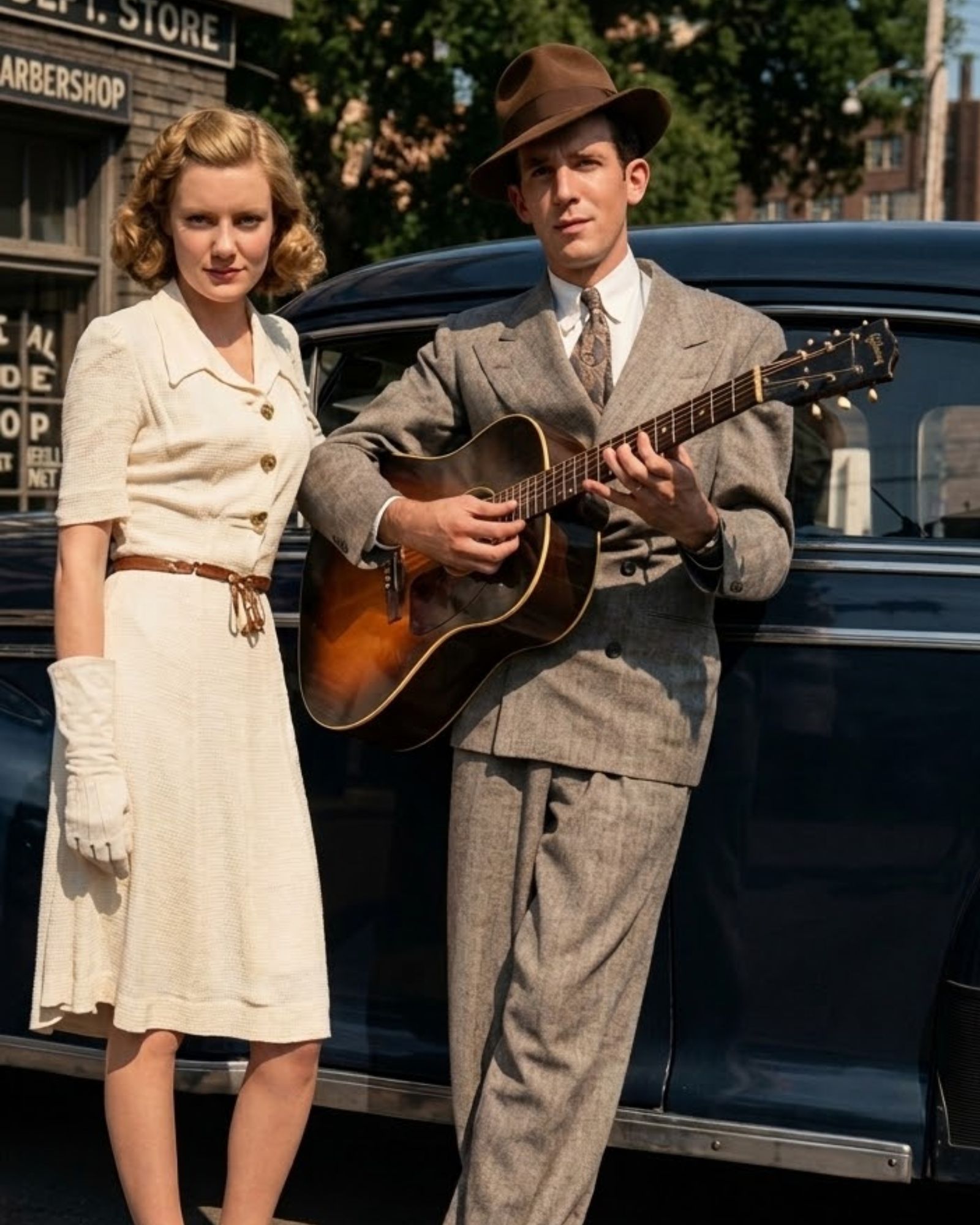
A Country Song Hit #1 in 1953 — But Hank Williams Wrote It in a Car, Still Haunted by the Woman He Couldn’t Forget
Some songs feel polished. Your Cheatin’ Heart did not. It felt wounded from the first line, as if it had been carried straight out of a private argument and set down in public for the whole world to hear.
That is part of what makes the story so unforgettable. Long before the song climbed to #1 in 1953, Hank Williams was riding in a car with Billie Jean, the woman who had become his new wife. The road stretched ahead, the kind of Southern highway that can make a person quiet. Somewhere between one destination and the next, Hank Williams reached for paper and began writing.
It was not a cheerful song. It was not the sound of a man starting over with a clean heart. It was the sound of old hurt refusing to stay buried.
A Song Born in Motion, But Written from a Standstill
Hank Williams had already lived enough pain for several lifetimes. Fame had come fast, but peace had not. The breakup with Audrey Williams had left scars that were deeper than headlines and gossip could ever explain. By the time Hank Williams was traveling with Billie Jean, the marriage to Audrey Williams was over, but the emotions were not.
That is what gives Your Cheatin’ Heart its strange power. It does not sound like revenge. It sounds more complicated than that. It sounds like a man talking tough while still bleeding underneath every word.
Billie Jean reportedly noticed Hank Williams writing and asked what he was working on. The answer was simple, almost dismissive: something that needed to come out. That may be the truest description of the song ever given.
Because that is exactly what Your Cheatin’ Heart feels like. Not manufactured. Not calculated. Just released.
Why the Song Cut So Deep
Plenty of country songs talk about heartbreak. Very few seem to stare directly at it without blinking. Hank Williams had a gift for that. He could take emotions people were ashamed to admit and turn them into plain, unforgettable lines. No fancy language. No hiding place. Just hurt, blame, memory, and the bitterness that lingers after love has already packed its bags.
That honesty is why the song lasted. Listeners did not hear a performance first. They heard a confession. Even people who knew nothing about Hank Williams’s private life could feel the truth inside it. The song sounded lived-in, as though every line had already been tested by sleepless nights, long drives, and the silence that follows an argument you cannot fix.
Hank Williams did not just write about heartbreak. Hank Williams wrote like heartbreak was sitting in the passenger seat.
The Hit Hank Williams Didn’t Live to See
There is another reason the story continues to haunt people: Hank Williams never got to watch the full impact unfold. The song was released after Hank Williams died at only 29 years old. Then it rose straight to the top.
That fact still feels almost impossible. A man writes a song while carrying the weight of a broken love. He records it. He leaves the world too early. Then the record keeps traveling without him, finding radio stations, jukeboxes, living rooms, and lonely people who understand every word.
In that sense, Your Cheatin’ Heart became bigger than the moment that created it. It stopped being only about Audrey Williams, or Billie Jean, or one hard drive on one long day. It became a permanent country standard because it touched something listeners recognized in themselves: the humiliation of betrayal, the anger that covers sadness, and the stubborn way love can keep talking long after it should have gone silent.
Why the World Still Listens
More than seventy years later, the song still feels immediate. That is rare. Many old hits survive because they are nostalgic. Your Cheatin’ Heart survives because it still hurts. Hank Williams found a way to turn private wreckage into public memory, and that kind of songwriting does not age easily.
Maybe that is the saddest part of the whole story. Hank Williams may have written those words for one woman who had already stopped listening. But the rest of the world never did. And perhaps that is what a classic really is: one person’s pain, written in a moving car, becoming everybody else’s heartbreak for generations.
