Introduction
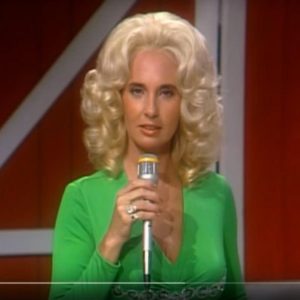
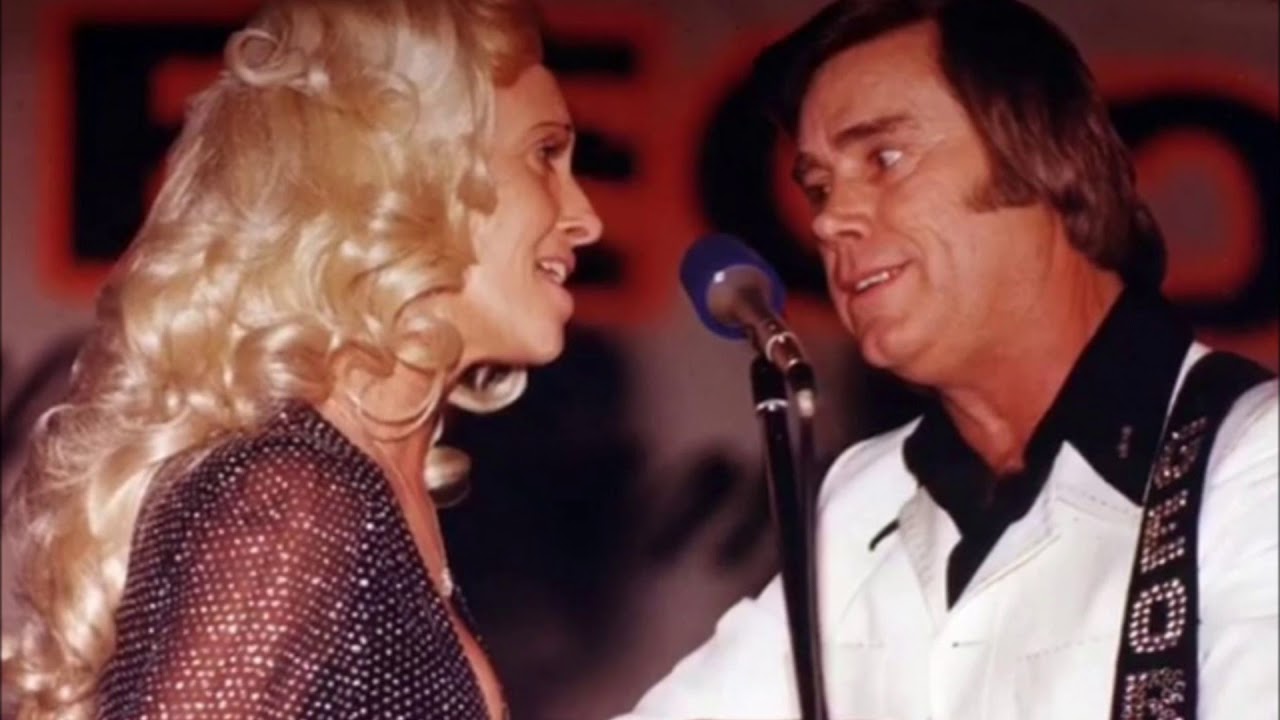
In the history of American country music, few partnerships have carried the emotional weight and public fascination of George Jones and Tammy Wynette. Their union was not simply a collaboration between two iconic voices. It became a living narrative that unfolded in recording studios, on concert stages, and under relentless media scrutiny. Their duet We Loved It Away, released in 1974, stands as one of the most revealing documents of that relationship. It does not romanticize love. It dismantles it.
At a time when their personal lives were unraveling, the pair continued to record music that felt uncomfortably close to reality. Listeners were not just hearing a song. They were witnessing a confession. Unlike earlier hits such as Golden Ring or Near You, which still allowed room for hope or reconciliation, We Loved It Away strips away illusion and replaces it with something far more unsettling. It suggests that love itself, when pushed to extremes, can become destructive.
The single was part of the album George and Tammy and Tina, a project that reflected both their professional strength and their personal instability. Commercially, the song succeeded, reaching number seven on the Billboard Hot Country Singles chart. Yet that success came with a sense of irony that was difficult to ignore. Within a year, the marriage behind the music would end in divorce. The recordings captured a partnership still functioning in public even as it disintegrated in private.
What makes We Loved It Away particularly striking is its rejection of traditional love narratives. Country music has long embraced heartbreak, but it often frames pain as something caused by betrayal or distance. This song offers a different perspective. It argues that the very intensity of their connection became the source of its failure. The cycle of arguments, reconciliations, and emotional extremes did not strengthen their bond. It wore it down.
The lyrics remain direct and unembellished. There is no attempt to dramatize beyond what is already present. The central idea is devastating in its simplicity. They did not lose love because it faded. They lost it because they used it up. The line that defines the song carries this message with clarity and restraint, expressing that they had enough love to last a lifetime but somehow spent it within a short span of years.
For Tammy Wynette, the performance reflects a voice shaped by endurance. Her delivery carries the sound of someone who has reached acceptance, not through resolution, but through exhaustion. She does not plead or accuse. Instead, she acknowledges what has already been lost. The emotional restraint in her voice becomes the source of its power. It suggests a quiet recognition that the outcome could not have been different.
“We had something real, something powerful, but it was not something we could hold together,” Tammy Wynette once reflected in interviews about their relationship.
In contrast, George Jones brings a different dimension to the duet. His voice carries a sense of collapse rather than clarity. Where Wynette sounds resolved, Jones sounds overwhelmed. His delivery feels less like acceptance and more like surrender. The combination creates a dynamic that few duets have achieved. It is not harmony in the traditional sense. It is two perspectives meeting at the same conclusion from different emotional paths.
“We loved hard, maybe harder than we should have, and that kind of love takes something out of you,” George Jones admitted when speaking about the period surrounding the recording.
The broader cultural context adds another layer to the song’s significance. During the early 1970s, the relationship between Jones and Wynette was widely covered in the media. Their arguments, reconciliations, and struggles became public knowledge. Fans were not approaching the song without context. They were aware of the instability behind the performances. This awareness transformed We Loved It Away into something more than a recording. It became a window into a relationship that was already under strain.
That visibility changes how the song is experienced. For those who followed their story at the time, each verse carried additional meaning. It confirmed what had been suggested in headlines and interviews. The passion that initially defined their connection was not sustainable. It became a force that consumed rather than supported them. The music did not hide this reality. It exposed it.
From a production standpoint, the song maintains a restrained arrangement that allows the vocals to remain central. There are no distractions. The instrumentation supports without overshadowing. This approach reinforces the sense that the song’s impact lies entirely in its emotional content. It is not built on complexity. It is built on honesty.
The legacy of We Loved It Away continues to resonate because it challenges a deeply rooted belief about love. It questions the idea that intensity guarantees permanence. Instead, it presents a scenario in which intensity accelerates decline. This perspective feels particularly relevant in the context of George Jones and Tammy Wynette, whose relationship embodied both extremes. They were capable of profound connection and equally profound conflict.
In the years that followed their divorce in 1975, both artists continued to build remarkable careers. Yet this song remains one of the clearest reflections of a specific moment in their shared history. It captures the point at which recognition replaced denial. The realization that what once brought them together was now pulling them apart is embedded in every line.
For modern listeners, the song still carries weight. It does not rely on nostalgia alone. Its message remains relevant because it speaks to a universal experience. Relationships defined by intensity often struggle with stability. The idea that love can be exhausted rather than lost introduces a perspective that is both uncomfortable and believable.
In the end, We Loved It Away stands not just as a successful single, but as a document of emotional truth. It records a partnership at the edge of collapse without attempting to soften or reinterpret that reality. The voices of George Jones and Tammy Wynette do not offer solutions. They offer acknowledgment. That distinction is what gives the song its lasting impact.
As country music continues to evolve, the duet remains a reference point for authenticity. It demonstrates that the most powerful performances are often those rooted in real experience. The story behind the song cannot be separated from the song itself. Each informs the other, creating a piece of work that feels complete in its honesty.
There are many songs about love and loss. Few confront the idea that love itself can be the cause of its own destruction. We Loved It Away does exactly that, leaving behind a record of a relationship that burned too intensely to endure.