As the 2026 NFL Draft approaches, the atmosphere in Kansas City is electric with a mixture of anticipation and strategic calculation. For a franchise that has defined the modern era of professional football, the upcoming draft represents more than just an opportunity to add depth; it is a chance to redefine the very nature of their dominance. The Kansas City Chiefs find themselves at a fascinating crossroads where the pursuit of immediate glory intersects with the necessity of long-term roster sustainability. In a recent and revealing deep dive, industry insiders including Kent Swanson of KCSN have begun to peel back the layers of what could be the most aggressive draft strategy in the Brett Veach era.
The narrative surrounding the Chiefs this year is not just about who they might take at pick nine, but how far they are willing to go to secure a “force multiplier.” The rumors of an aggressive trade-up into the top five, or even as high as the number three spot currently held by the Arizona Cardinals, have sent shockwaves through the league. The objective of such a move would be singular and devastating: to secure a defensive playmaker so dynamic that he creates nightmare matchups for opposing coordinators before the ball is even snapped.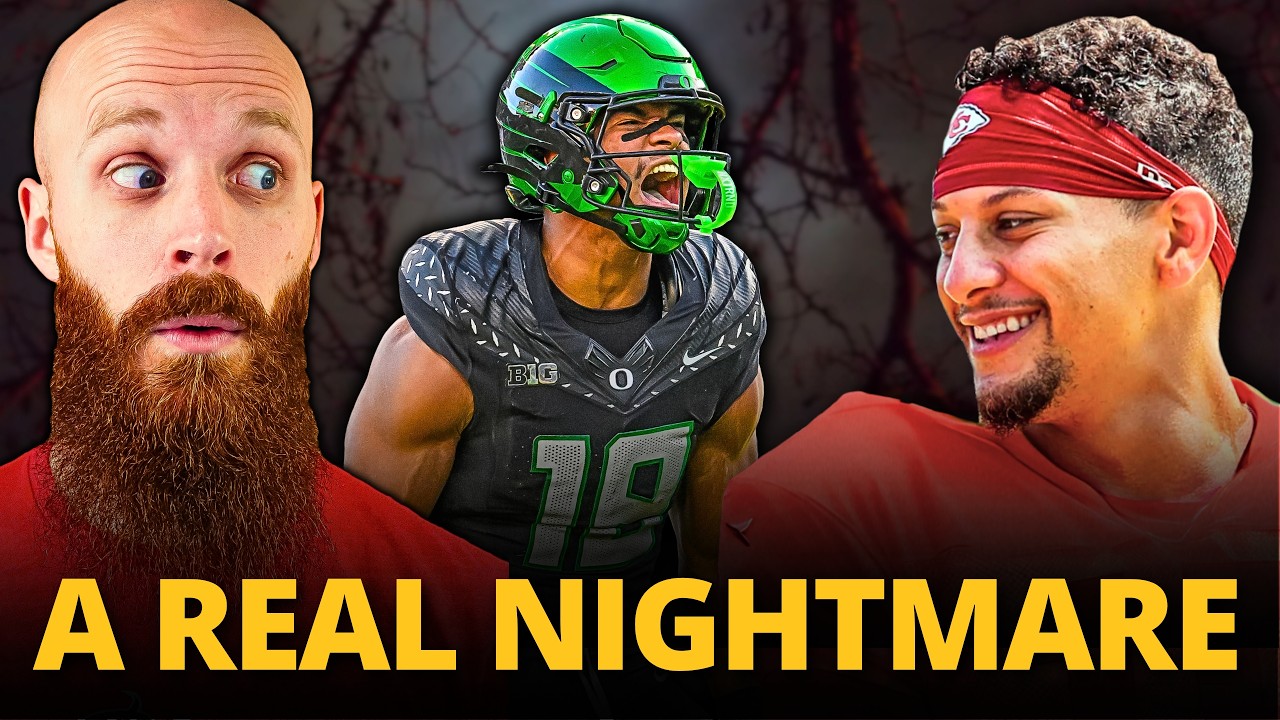
The Arvell Reese Wildcard
While much of the fan base has been clamoring for the productive Ruben Bane Jr., the internal focus of the Chiefs’ front office may be shifting toward a different kind of athlete. Arvell Reese, the Ohio State standout, has emerged as the “scary” option that could make the Chiefs’ defense truly impenetrable. Reese is a unique football specimen—a linebacker by trade who has shown a natural, almost eerie talent for edge rushing. Despite a lack of formal training as a defensive end, Reese’s tape shows a player with an explosive first step and a closing speed that belies his size.
Kent Swanson points out that Reese is a “unique football player” whose upside is virtually limitless. At just 21 years old, he represents the kind of raw, high-ceiling talent that defensive coordinator Steve Spagnuolo loves to mold. If the Chiefs trade into the top five, the consensus is growing that it won’t be for a traditional speed rusher, but for a hybrid weapon like Reese. The logic is sound: in a league that is increasingly defined by positionless football, having a player who can shadow an elite tight end on one play and strip-sack a quarterback on the next is the ultimate strategic advantage.
The Ruben Bane Short-Arm Debate
Of course, no discussion of the Chiefs’ defensive needs is complete without mentioning Ruben Bane Jr. The Miami product is a darling of the scouting community for his exceptional tape and relentless motor. However, Bane comes with a “short-arm” tag that has historically made some teams nervous. Yet, the Chiefs have a history of betting on the tape over the measuring tape. Players like Trent McDuffy and Brandon Graham (during Andy Reid’s tenure in Philadelphia) were outliers in terms of their physical profiles, but they possessed the football IQ and technical proficiency to mitigate those concerns.
Bane plays with a violence and a low center of gravity that makes him a “slam dunk” pick if he falls to number nine. The question is whether the Chiefs believe his ceiling is high enough to warrant staying put, or if they see him as a player who might fall even further, allowing for a strategic trade-back. The “thorns in the side” for Kansas City are teams like the Saints and the Commanders, both of whom are hungry for pass-rush help and could easily snap up Bane before the Chiefs are on the clock.
The Longevity Crisis at Wide Receiver
While the defense is a primary focus, the Chiefs cannot ignore the looming questions in their offensive skill positions. With Travis Kelce’s eventual retirement approaching and the long-term future of Rashee Rice under scrutiny, the need for a dynamic playmaker in the slot or on the perimeter is undeniable. The 2026 draft class, while perhaps lacking in traditional “top-end” talent, is deep with receivers who fit the Chiefs’ specific offensive profile.
Carnell Tate and Jordan Tyson are two names that consistently surface in conversations about pick nine. Tyson, in particular, has seen his stock soar following recent workouts that demonstrated a “Cadarius Tony-esque” agility and burst. While the concerns about soft-tissue injuries are real, the potential of a fully healthy Tyson in an Andy Reid offense is enough to make any defensive coordinator lose sleep. Then there is Makai Lemon, a player who could serve as a direct replacement for the volume of targets currently absorbed by Kelce and Rice in the intermediate middle of the field. Lemon is a “home run hitter” who can turn a simple under route into a game-changing touchdown.
The Trenches: Maui Noah vs. Spencer Fano
The national media has been persistent in mocking an offensive tackle to the Chiefs at pick nine. The logic is simple: protect the billion-dollar asset that is Patrick Mahomes. However, those closer to the team are more skeptical of using such a high asset on a tackle this year. If the Chiefs do go the tackle route, the preference seems to lean toward Francis Maui Noah over Spencer Fano.
The reasoning comes down to the “Spagnuolo and Reid Prototypes.” Fano, despite his athletic freakishness, lacks the arm length that Andy Reid traditionally prefers in his tackles. Maui Noah, conversely, has the requisite length and a frame that suggests he could become an All-Pro guard if he doesn’t stick at tackle. The “asset allocation” of taking a tackle at nine feels “less palatable” to experts when compared to the impact a generational pass rusher or a top-tier wide receiver could provide. The consensus is that if the Chiefs want a tackle, they should look toward the end of the first round or even a small trade-up from pick 40.
The Sneaky Needs: Linebacker and the “Spags Special”
Beyond the headline-grabbing first-round picks, the Chiefs are quietly scouting for the next generation of defensive stalwarts. The departure of Leo Chenal has created a “sneaky need” at the linebacker position. Jacob Rodriguez out of Texas Tech and Josiah Trotter from Missouri are two players who fit the “physicality-minded” profile the Chiefs crave at the second level. Trotter, specifically, is noted for his insane run instincts—a trait that Spagnuolo values above almost all else for his base defense.
Then there is the “Spags Special” at cornerback. Davidson Igbinosun from Ohio State has emerged as a favorite mid-round sleeper. Igbinosun is a physical, almost violent corner who thrives in press-man coverage. While he has a noted penalty problem, his “starter potential” and fit in a press-heavy scheme make him a tantalizing option at pick 74. In the hands of defensive backs coach Dave Merritt, Igbinosun could become the next late-round gem in a secondary that is constantly losing talent to high-priced free agency.
The Vision of the Dynasty
Ultimately, the 2026 NFL Draft for the Kansas City Chiefs is about vision. Brett Veach and Andy Reid are not just building for the upcoming season; they are engineering a roster that can withstand the inevitable cycles of the league. Whether it is an aggressive leap for Arvell Reese, a “slam dunk” selection of Ruben Bane, or a strategic trade-back to acquire more volume, the goal is to keep the championship window open as wide as possible.
The prospect of adding a talent like Reese or a burner like Tyson to a team that already boasts the greatest quarterback of his generation is, as the insiders put age, “scary as hell.” It is the kind of move that doesn’t just win games—it demoralizes opponents. As draft night approaches, the Chiefs Kingdom waits with bated breath to see if the organization will pull off the masterstroke that ensures their dynasty continues for another decade.