The Kansas City Chiefs are entering a period of profound transformation. Following a season that saw the once-untouchable dynasty stumble to a 6-11 finish, the pressure on general manager Brett Veach and head coach Andy Reid has reached an all-time high. The core of the problem is no secret to anyone who watched a single snap of Chiefs football last year: the offense, once a high-flying juggernaut that struck fear into the hearts of defensive coordinators, has become stagnant, predictable, and—most frustratingly—unreliable. Patrick Mahomes, the most gifted passer of his generation, spent much of the season forced into a “check-down” mentality as his receiving corps struggled to create separation and, more importantly, struggled to actually catch the football.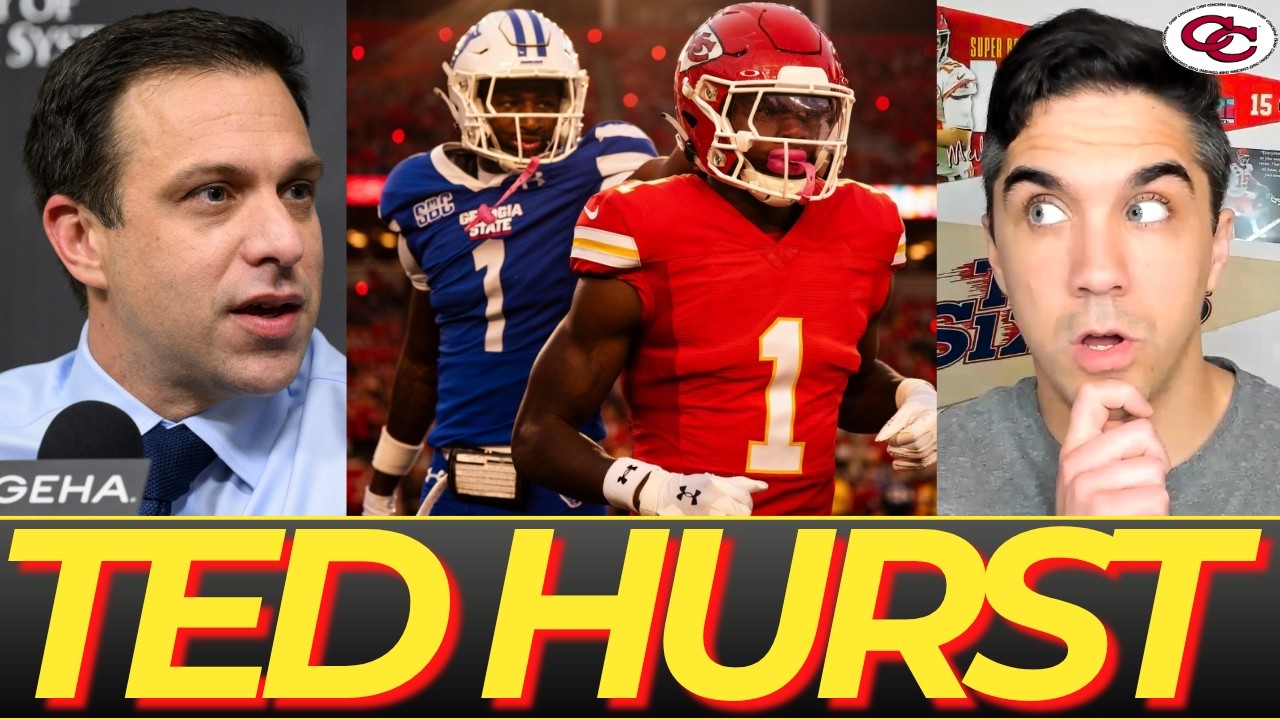
However, a new name has emerged from the scouting shadows that could represent the ultimate solution to the Arrowhead identity crisis. Ted Hurst, a 6’4″, 206-pound vertical monster out of Georgia State, has suddenly become the focus of intense internal debate and fan speculation. While he may not carry the blue-blood pedigree of an Ohio State or LSU prospect, the numbers and the tape suggest that Hurst might be the single most explosive “hidden gem” in the 2026 NFL Draft. The Chiefs have already hosted Hurst for an official visit, a move that signals serious interest in a player who could redefine the boundaries of Reid’s surgical offense.
To understand why Ted Hurst has the scouting community in a frenzy, one must first look at his “RAS” (Relative Athletic Score). Hurst recorded a staggering 9.92 out of 10.0, a number that places him in the top 1% of all wide receivers tested since 1987. Standing at 6’4″ and running a blazing 4.42-second 40-yard dash, Hurst possesses the kind of rare physical profile that simply cannot be coached. He is a “freak of nature” in the truest sense of the word, combining the height of a red-zone specialist with the top-end speed of a track star. In an era where the Chiefs have lacked a consistent “X” receiver who can win on the outside, Hurst represents a prototype that the franchise hasn’t successfully deployed since the early days of the Mahomes era.
The statistical dominance Hurst displayed at Georgia State is equally compelling. In 2025, he hauled in 71 catches for 1,000 yards, earning an 82.0 grade from Pro Football Focus. But the most eye-popping stat in his portfolio is his big-play production. Over the last two seasons, Hurst has led the entire FBS with 34 receptions of 20 or more yards. He is quite literally the best deep-ball specialist in the country, a “go-ball” expert who thrives on taking the top off a defense. For a Chiefs offense that has been forced to dink and dunk their way down the field, the prospect of adding a legitimate vertical threat who can stretch the field vertically is intoxicating.
Beyond the speed and the size, Hurst brings a quality that the Chiefs’ current roster has lacked in spades: reliability. The 2025 season was defined by a series of catastrophic drops that often occurred at the worst possible moments. Hurst, despite being the focal point of the Georgia State offense and being targeted over 140 times, recorded only seven drops last season. Furthermore, his contested catch rate of 61.1% puts him in the 95th percentile nationally. He is a “reliable hands” guy who actually relishes the opportunity to go up and fight for the football in traffic. In the red zone, where the Chiefs have struggled to find a big-bodied target to complement Travis Kelce, Hurst’s 6’4″ frame and high-pointing ability could provide Mahomes with the “bail-out” option he has been missing.
However, the pursuit of Hurst is not without its detractors. A significant debate has erupted within the scouting community regarding the “level of competition” Hurst faced in the Sun Belt Conference. Some anonymous scouts have expressed skepticism, claiming that it is difficult for a player coming from a smaller program to refine their skills—particularly their route tree and their ability to beat NFL-level press coverage—after making the leap to the professional level. One scout went as far as to suggest that Hurst’s “ball skills” might be too inconsistent to improve against elite cornerbacks.
This assessment, however, has been met with a fierce defense from legendary wide receiver and analyst Steve Smith. Smith, known for his “dog” mentality and his ability to spot raw talent, recently tore into the anonymous critics of Hurst. Smith argued that the “small school” moniker is often a lazy scouting trope, pointing out that Hall of Famers like Jerry Rice and Terrell Owens came from similarly unheralded programs. Smith’s contention is that if a player has the physical tools (the 4.4 speed and the 6’4″ frame) and the production, the competition level is secondary. The logic is simple: speed is speed, and if a player is catching the ball over defenders in the Sun Belt, he has the foundation to do it in the NFL with the right coaching.
The Chiefs’ interest in Hurst is strategically sound. Currently projected as a Day 2 selection—falling somewhere between the late second and early third round—Hurst represents a high-value opportunity. With the ninth overall pick likely being used on an elite edge rusher or a top-tier tackle, the Chiefs need to find a way to secure a “WR1” caliber player without using their primary draft capital. Hurst fits that bill perfectly. If Veach can secure a game-changer like Ruben Bane at pick nine and then circle back to land Ted Hurst at pick 40, the narrative of the 2026 off-season changes overnight from one of decline to one of a masterfully executed reload.
The “fit” within the Chiefs’ system is perhaps the most exciting aspect of the Hurst storyline. Imagine an offense where Travis Kelce is operating in the intermediate middle, a healthy and focused rookie wideout is winning on the outside, and Ted Hurst is sprinting down the sideline, forcing safeties to stay 20 yards off the line of scrimmage. This spacing would open up massive lanes for Mahomes and the running game, restoring the “surgical” nature of Andy Reid’s play-calling. Hurst is the “X” factor that makes every other piece of the offense more dangerous.
Of course, there will be a learning curve. Hurst will need to expand his route tree beyond the vertical concepts he mastered at Georgia State. He will need to learn how to use his size to shield defenders when being pressed at the line of scrimmage. But the Chiefs have the infrastructure to support that development. With Andy Reid’s history of developing receivers and Patrick Mahomes’ ability to throw players open, Hurst would be entering the most player-friendly environment in the league.
As the draft nears, the tension in the Kingdom is palpable. Fans are weary of “projects” that never pan out, but Ted Hurst feels different. He doesn’t just have potential; he has historical athleticism and a proven track record of catching the ball when it matters most. He is a “zero-star recruit” who worked his way into the national spotlight, a journey that speaks to a level of discipline and hunger that would fit perfectly into the Chiefs’ locker room.
The 2026 NFL Draft will be remembered as the moment the Chiefs either saved their dynasty or allowed it to slip away. By targeting a “hidden gem” like Ted Hurst, the front office is signaling that they are willing to take calculated risks to find the next great superstar. Whether Hurst becomes the next AJ Brown replacement or the vertical threat that finally unlocks Mahomes’ full potential, one thing is certain: the eyes of the NFL are on the kid from Georgia State, and the Kansas City Chiefs might be the ones to give him the stage he has been waiting for. The hunt for the next championship begins with finding the players that everyone else is too afraid to draft, and in Ted Hurst, the Chiefs may have found exactly what they need to return to the top of the mountain.