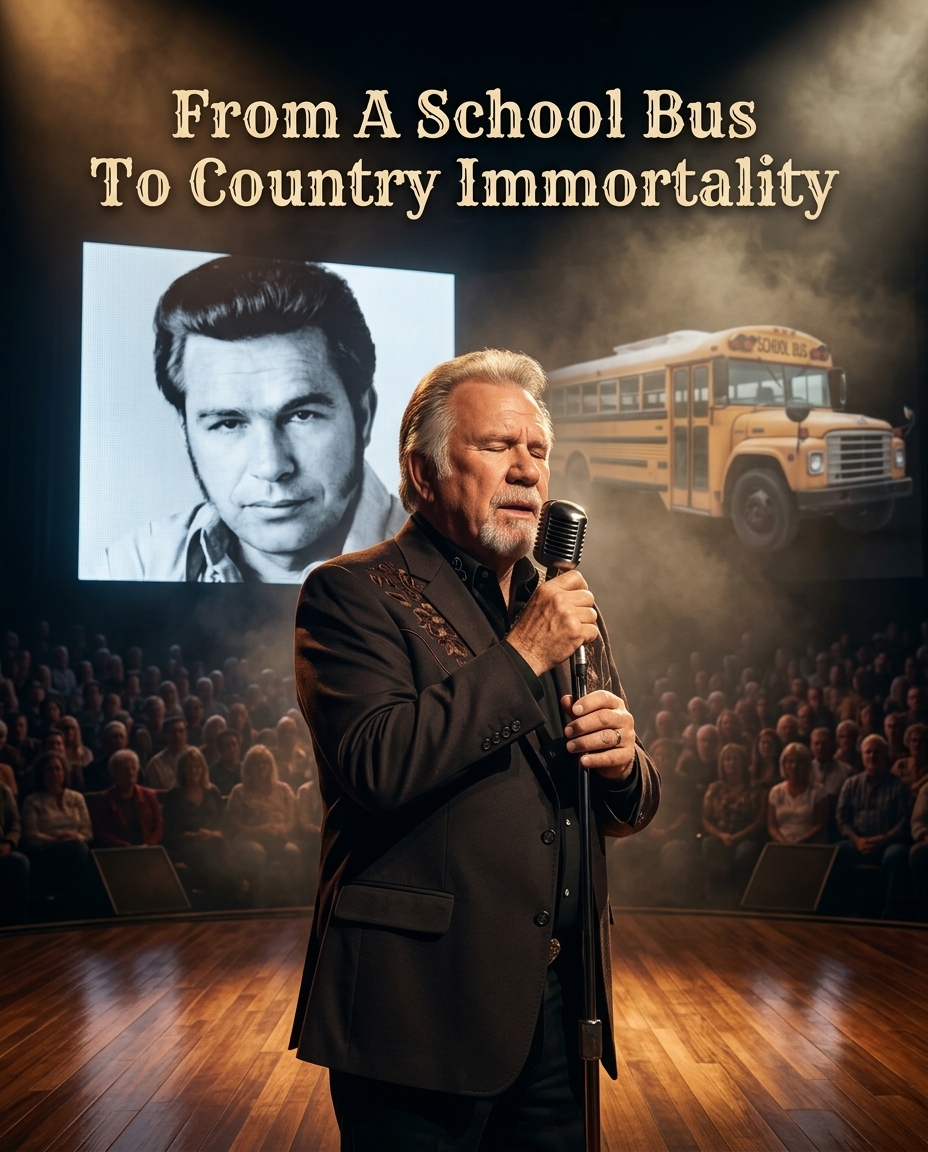
He Grew Up in a Converted School Bus With 6 Siblings — 60 Years Later, His Voice Still Silences the Grand Ole Opry
Some stories in country music begin with bright lights, early breaks, and someone important opening the right door at the right time. Gene Watson’s story did not begin that way.
Gene Watson came from a life that felt far removed from the polished image of stardom. Home was not a big house full of comfort or a childhood shaped by certainty. Home was a converted school bus, crowded with seven children, where space was tight and the future probably felt even tighter. It was the kind of beginning that teaches a person how to live without much, how to stay quiet when life gets hard, and how to keep moving even when there is no clear road ahead.
There was no grand plan waiting for Gene Watson. No one was standing nearby promising fame. No one was telling Gene Watson that one day crowds would fall completely silent just to hear a single line sung the right way. Back then, survival came first.
A Working Man Before a Country Star
Before the applause, Gene Watson worked with his hands. He fixed cars during the day, doing honest work that left grease on his skin and fatigue in his bones. At night, Gene Watson stepped into honky-tonks and small rooms where people were often more interested in drinking, talking, or forgetting their week than listening closely to another singer chasing a chance.
Those were not glamorous nights. They were long and uncertain. The kind of nights where a singer could give everything and still walk out feeling invisible. Faces in the audience changed. Rooms blurred together. Sometimes it must have seemed as if the songs disappeared the moment they were sung.
Nashville did not rush to embrace Gene Watson. In fact, for years, it seemed to look right past Gene Watson. The music business has always had room for trends, for packaging, for the next big thing. But Gene Watson never sounded like a trend. Gene Watson sounded like truth, and truth does not always get recognized quickly.
The Song That Changed Everything
Then came the song that altered everything.
“Farewell Party” was not a flashy song. It did not depend on noise or novelty. Instead, it carried something heavier and more lasting: heartbreak, dignity, and the quiet pain of loving someone who never truly loved you back. In the song, a man imagines his own funeral and asks the woman at the center of his sorrow to come, not because love was real, but because he longs for one final moment of make-believe.
It was the kind of song that did not just entertain people. It stayed with them.
When Gene Watson sang it, listeners believed every word. That was the difference. Gene Watson did not perform sadness like an actor trying on a role. Gene Watson sounded like someone who understood how disappointment settles into the heart and stays there. That honesty turned the song into more than a hit. It became personal for people. It found its way into living rooms, jukeboxes, lonely drives, and, over time, even real funerals across America.
Very few singers ever record a song that becomes part of people’s private grief. Fewer still can sing that song for decades without draining it of feeling. But Gene Watson could.
No Major Awards, No Reinvention, No Gimmick
What makes the story even more striking is what did not happen. Gene Watson did not become the center of a glittering award-season narrative. Gene Watson was never handed the kind of official recognition that often defines a career in headlines. There were no endless waves of industry trophies to turn the story into something neat and obvious.
And yet, none of that seems to matter when Gene Watson stands at a microphone.
More than sixty years after those early hard years, Gene Watson still carries a voice that feels untouched by fashion. While country music changed around him again and again, chasing new sounds, new images, and new audiences, Gene Watson held onto the one thing that could not be manufactured: a voice rooted in feeling. Clear. Steady. Deeply human.
That is why rooms still go quiet. That is why the Grand Ole Opry still listens. Not out of nostalgia alone, but out of respect. Because when Gene Watson sings, the performance does not feel borrowed from another era. It feels present. It feels earned.
The Power of Staying the Same
There is something almost defiant about Gene Watson’s longevity. In an industry built on reinvention, Gene Watson endured by refusing to become anything other than Gene Watson. No gimmick. No desperate transformation. Just song after song delivered with conviction.
Maybe that is why the story hits so deeply. A child raised in a converted school bus. A mechanic by day. A singer at night. A man overlooked for years. And somehow, through patience, hardship, and one unforgettable song, Gene Watson became the kind of artist whose voice can still stop a legendary room cold.
Not every legacy arrives with trophies in hand. Some arrive with something stronger: the ability to make people feel, decade after decade, that a song still matters. Gene Watson built that kind of legacy the hard way. And after all this time, Gene Watson is still standing there, still singing, still proving that what is real never goes out of style.
