Introduction
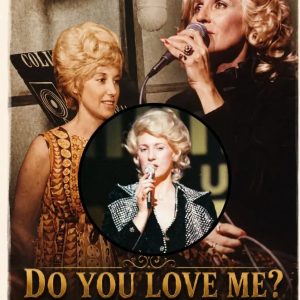
In 1987, a rare moment unfolded on American television when Dolly Parton, Emmylou Harris, and Linda Ronstadt stood together to perform My Dear Companion. It was not designed as spectacle. There were no elaborate arrangements, no dramatic lighting, and no attempt to dominate the stage. What emerged instead was a restrained and deeply human performance that drew its strength from harmony, memory, and shared experience.
The appearance took place during Dolly Parton‘s television program, at a time when each of the three artists had already established a significant presence in American music. Their collaboration under the name Trio had been years in the making. Since the early 1970s, the three singers had discussed recording together, united by a shared respect for traditional American music and its themes of love, loss, and endurance. Yet professional commitments and individual careers repeatedly delayed the project.
By the time the album Trio was released in early 1987, the collaboration represented more than a musical partnership. It marked a reunion shaped by patience and mutual regard. Within that collection, My Dear Companion, a traditional folk song, stood out for its intimacy. When performed live on television, the song revealed its full emotional depth.
The performance was built entirely around three voices. Linda Ronstadt delivered lines with a clarity that carried a sense of unresolved memory. Emmylou Harris brought a softer tone, her voice measured and reflective. Dolly Parton, known for her storytelling, grounded the piece with warmth and emotional precision. Together, their voices did not compete for attention. Instead, they blended in a way that suggested familiarity and trust.
“We had been talking about singing together for years, and when it finally happened, it felt natural, like we had never really stopped.”
The strength of the moment did not lie in technical perfection, though the performance was carefully controlled. Its impact came from restraint. Each singer appeared to listen as much as she sang. The harmonies developed without force, leaning into one another rather than standing apart. The result was closer to conversation than performance.
There is a particular quality in music that does not attempt to impress but simply exists with honesty. My Dear Companion reflects that approach. The song addresses distance and longing, expressing separation without dramatization. Its delivery on television followed the same principle. There were no exaggerated gestures. The emotional weight remained in the phrasing, in the pauses, and in the balance between voices.
By 1987, all three artists had experienced the complexities of public life. Their careers had brought success as well as personal challenges. That history contributed to the depth heard in their singing. Each line carried an awareness of the themes embedded in the song. They were not interpreting the material from a distance. They were engaging with it from lived experience.
“When we sing something like that, we are not just performing it. We understand what it means to miss someone, to hold on to something that is already gone.”
The performance also carried a quieter cultural significance. At a time when the music industry remained largely shaped by male narratives, three women stood together without rivalry. There was no sense of competition or hierarchy. Instead, the focus remained on collaboration. The harmony extended beyond sound into presence, offering an example of shared artistic space.
Looking back nearly four decades later, the performance continues to resonate. Its importance does not come from scale or historical milestone in the conventional sense. Rather, it lies in its ability to capture a fleeting moment. Three voices, shaped by time and experience, met in a setting that allowed for balance and clarity. Nothing more was required.
My Dear Companion was never intended to dominate charts or define a commercial era. Its purpose was quieter. It offered a reflection on absence and connection, delivered through simplicity. That quality has contributed to its longevity. In an environment that often prioritizes speed and volume, the performance stands as a reminder of a different approach to music.
Long after the broadcast ended and the studio lights were turned off, the harmonies remained. They persisted not only in recordings but also in memory. For audiences who encountered that moment, the performance did not conclude with the program. It continued in a more subdued form, carried forward through listening and recollection.
The collaboration between Dolly Parton, Emmylou Harris, and Linda Ronstadt demonstrated that music does not require excess to endure. Sometimes, three voices and a shared understanding are sufficient. The television performance of My Dear Companion remains a clear example of that principle, preserving a moment where restraint, experience, and connection aligned with uncommon precision.