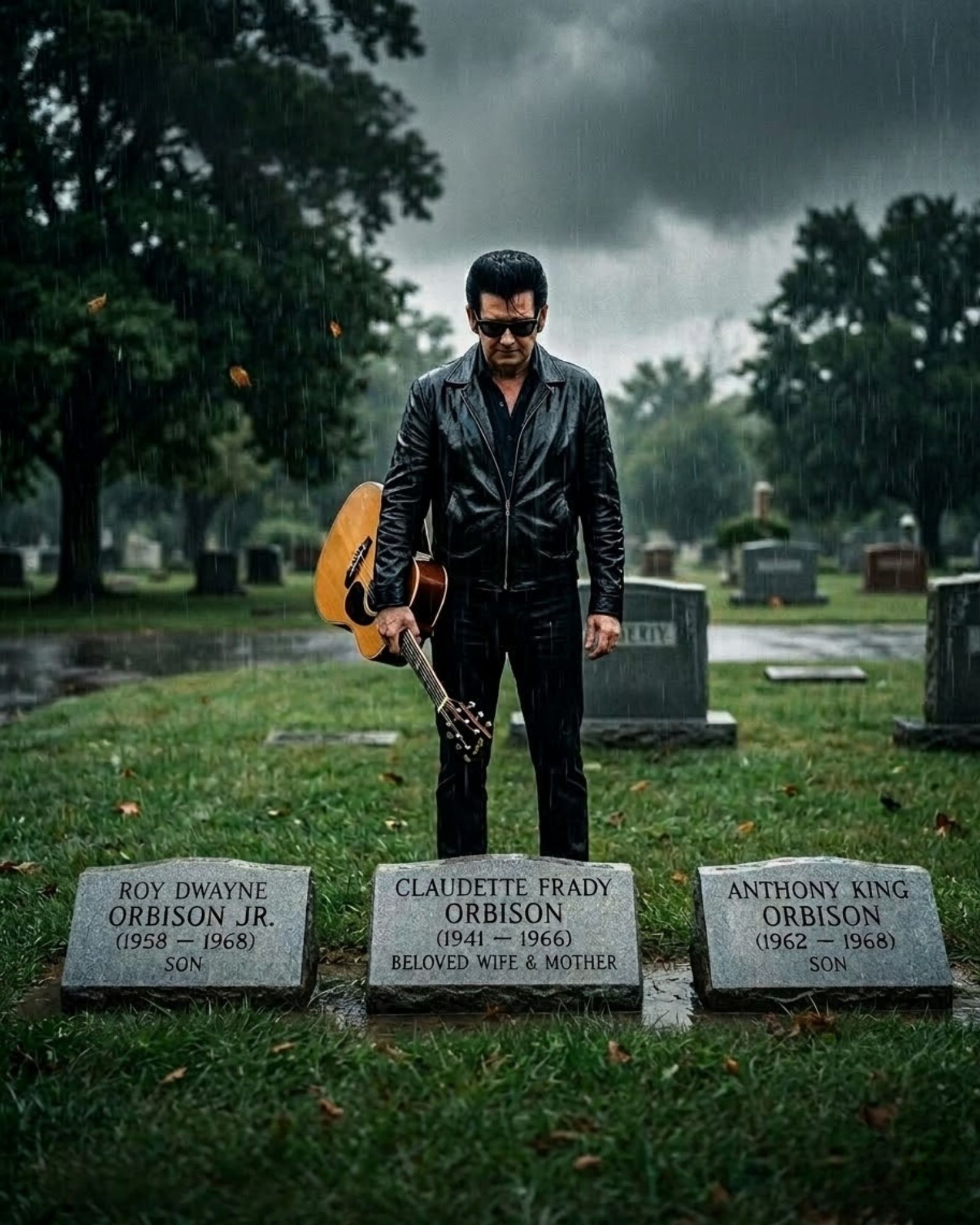
Roy Orbison Turned Unthinkable Grief Into Some of the Most Beautiful Songs Ever Heard
There are artists who entertain, artists who impress, and artists who seem to sing from a place so deep that the room changes the moment their voice begins. Roy Orbison belonged to that last kind. Roy Orbison did not just record songs. Roy Orbison carried sorrow into the studio and somehow gave it a melody people could live inside.
By the mid-1960s, Roy Orbison was already known for a voice unlike anyone else in popular music. It could rise from a whisper into something almost operatic, but never lose its tenderness. Songs like Crying, In Dreams, and Oh, Pretty Woman made Roy Orbison unforgettable. There was mystery in the sound, but also loneliness. Even in the biggest hits, there was always the feeling that Roy Orbison understood heartbreak better than most.
Then life gave Roy Orbison more heartbreak than any person should have to carry.
The Loss That Changed Everything
In 1966, Roy Orbison’s wife, Claudette, was killed in a motorcycle accident. Roy Orbison was there. The horror of that moment stayed with him, not as a rumor or a distant memory, but as something witnessed with his own eyes on the side of a highway. The woman who had been central to Roy Orbison’s life was suddenly gone, and nothing after that could ever feel quite the same.
Two years later, tragedy struck again with even greater cruelty. A fire tore through Roy Orbison’s home in Nashville. Inside were Roy Orbison’s two eldest sons, Roy Jr. and Tony. They did not survive. In the space of only a few years, Roy Orbison had buried his wife and two children. It is difficult even to write those words, let alone imagine living through them.
For many people, that kind of grief would have ended everything. Silence would have made sense. Withdrawal would have made sense. Disappearing would have made sense.
But Roy Orbison kept singing.
A Voice That Sounded Like Survival
That is part of what makes Roy Orbison’s music feel so different even now. The beauty was always there, but after so much loss, the beauty seemed to carry a different weight. Listeners were not just hearing a great vocalist. They were hearing a man who had every reason to break and still chose to turn toward music.
Critics and fans often described Roy Orbison’s recordings as haunting, but that word only tells part of the story. Roy Orbison did not sound haunted in a theatrical way. Roy Orbison sounded human. Fragile. Searching. As if each line had been tested by real life before it ever reached the microphone.
Some voices entertain you for three minutes. Roy Orbison’s voice stays with you because it feels like it knows something about pain that words alone cannot explain.
That is why songs like Crying still feel personal. That is why In Dreams still feels like a private confession floating through darkness. And that is why even a song as bright and iconic as Oh, Pretty Woman now carries an added layer of wonder. The same man who could sound playful and cool could also sound shattered, heavenly, and alone.
The World Found Roy Orbison Again
For a time, it seemed as though the world had moved on too quickly from Roy Orbison. Music changed. Tastes shifted. New voices took the spotlight. But great artists have a strange way of returning when people need them most, and in 1988 Roy Orbison stepped into one of the most remarkable late-career revivals in modern music.
That year, Roy Orbison joined the Traveling Wilburys alongside Bob Dylan, George Harrison, Tom Petty, and Jeff Lynne. It was not a tribute act or a nostalgic reunion. It felt alive. Fresh. Joyful. Roy Orbison was not standing beside those names as a relic from another era. Roy Orbison stood among them as an equal, with that same impossible voice still able to stop people cold.
There was a feeling around Roy Orbison then that life had opened a door again. After so much darkness, happiness seemed possible. Not perfect happiness, not the kind that erases old grief, but something gentler and deeply earned. The world was rediscovering Roy Orbison, and Roy Orbison seemed to be rediscovering a future.
A Farewell That Came Too Soon
Then, on December 6, 1988, Roy Orbison died of a heart attack. Roy Orbison was only 52 years old. The timing made the loss feel especially cruel. It was not simply that a legendary singer had died. It was that Roy Orbison had just stepped back into the light.
Tom Petty’s words have lasted because they captured that shock so perfectly: “Roy had the voice of God — and God wanted it back.”
It remains one of the most moving things ever said about a singer, perhaps because it does not feel exaggerated when applied to Roy Orbison. Few artists sounded so wounded and so majestic at the same time.
The tragedy was not only that Roy Orbison died. The deeper tragedy was that the world had only just begun to find Roy Orbison again. And yet, maybe that is why the music still hits so hard. It feels unfinished in the most human way. Not because Roy Orbison gave too little, but because Roy Orbison gave so much that people still wish there had been more.
Roy Orbison lost nearly everything. Still, Roy Orbison sang. And in doing so, Roy Orbison left behind songs that do more than sound beautiful. They remind us that even after unbearable grief, the heart can still make music.