Davao City — In a press encounter marked by defiance, candor, and flashes of dry humor, Sebastian Duterte, more widely known as Mayor Baste, made one thing unmistakably clear: he has little faith in the International Criminal Court and even less concern about its impending decisions regarding his father, former President Rodrigo Duterte.
“I don’t really care what the result will be,” the mayor said bluntly. “All I care about is my gratitude to the people who support my father.”
It was not merely a statement of skepticism. It was a declaration of political posture.
A Visit Centered on Family, Not Proceedings
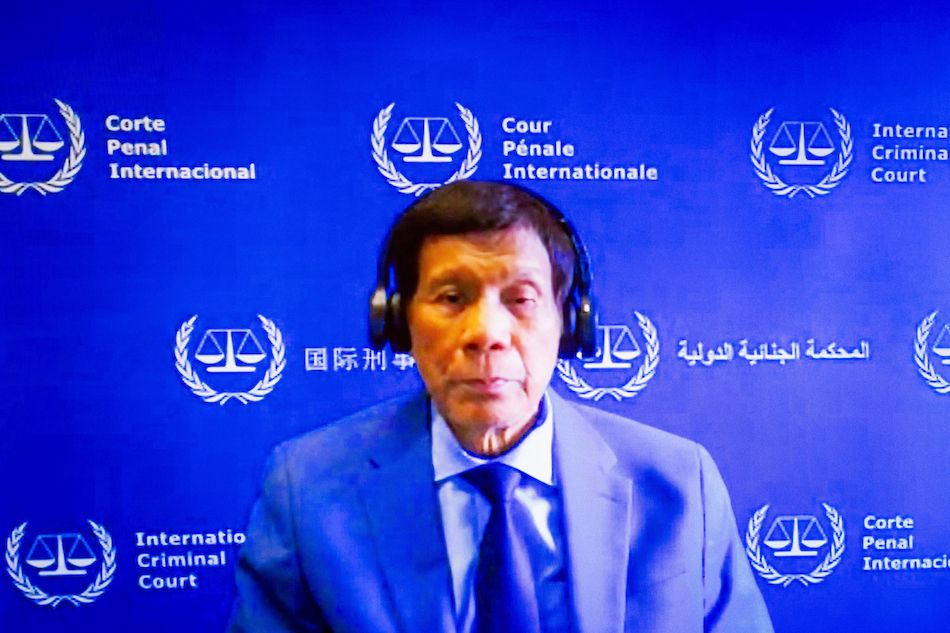
Mayor Duterte had just come from visiting his father, who is currently detained in The Hague pending ICC proceedings linked to the controversial anti-drug campaign of his presidency. The visit, he insisted, revolved around everyday matters — family updates, grandchildren, and life outside detention walls.
“We don’t talk about those things inside,” he said when pressed about the ICC hearings. “It’s not allowed. We’re not supposed to discuss the case.”
When asked whether his father had watched news coverage of the confirmation of charges hearing, the mayor replied simply: “I don’t know.”
He added that no member of the family had intentionally monitored the proceedings. Politics, he suggested, was not the subject of that reunion.
Instead, they spoke about grandchildren. About Davao. About ordinary concerns.
“The one he misses the most?” a reporter asked.
“Grandchildren,” the mayor answered without hesitation.
On the ICC: Distrust and Doubt
But when discussion turned to the ICC itself, Mayor Duterte’s tone shifted from familial warmth to ideological critique.
“I do not trust this thing that you call the ICC,” he said.
He questioned the institution’s credibility, arguing that most of those prosecuted are leaders from developing nations. “You won’t see anything there from Western countries,” he claimed. “They use this institution to intervene in domestic affairs.”
The mayor referenced tensions between the ICC and the United States, suggesting that even powerful nations have clashed with the tribunal.
His criticism went further. He argued that due process had not been properly followed in his father’s case.
“There should have been a proper way of putting him inside the detention unit,” he said. “He was supposed to go to local courts first. None of that was followed.”
For Mayor Duterte, the central question is procedural: Why was his father transported abroad without passing through Philippine courts?
“If that institution is truly honorable, then they should send him back and follow the usual process,” he said.
Political Undertones and Allegations
Mayor Duterte did not avoid broader political implications.
When asked whether there was a feud between his family and the administration of President Ferdinand Marcos Jr., he dismissed the idea.
“There is none,” he said. “We didn’t talk about that.”
But he pointed to midterm election results in Davao City as an indirect indicator of political sentiment. According to him, heavy national investment in Davao did not translate into electoral victory for Marcos-aligned candidates there.
“That says a lot already,” he remarked.
The mayor also characterized the ICC proceedings as part of what he described as a “narrative of the left” versus his family’s narrative. He accused critics of romanticizing grievances and suggested that members of left-leaning groups had lobbied abroad against his father.
“It’s my word against yours,” he said, summarizing the polarized discourse.
On Optimism and Preparedness
When asked whether he felt optimistic that charges would not be confirmed against his father, Mayor Duterte answered cautiously.
“I cannot be optimistic,” he admitted. “This is a foreign institution. It has its own issues.”
Yet he insisted the family is prepared for any eventuality.
“We’re always prepared,” he said. “We’re not here just to cry. This is politics.”
That remark encapsulated the family’s framing of the situation: not as a purely legal battle, but as a political struggle unfolding on an international stage.
The Human Dimension
Beyond geopolitics and legal arguments, the mayor described visible changes in his father.
“He lost weight,” he acknowledged. “Of course, everyone probably gets depressed when you put them in a detention unit. You don’t want to eat because you have no appetite. It’s the situation.”
There were no birthday plans for the former president’s upcoming 81st birthday, he added. The family traditionally does not celebrate birthdays lavishly.
“It’s just practice,” he said. “Nothing special.”
The mayor also clarified that discussions inside the detention facility deliberately avoid sensitive topics, including his sister Vice President Sara Duterte and her political decisions.
“We didn’t talk about politics,” he insisted.
Governance in Davao
Back home in Davao City, Mayor Duterte remains focused on local governance.
When asked about the city’s performance under his leadership, he deflected praise.
“You should ask the people,” he said. “Do not ask politicians. Politicians will always promote themselves.”
He described Davao as relatively stable and improving but refrained from declaring it exemplary.
If empirical data is desired, he suggested, surveys of residents would be more telling than his own opinion.
No Higher Office in Sight?
Speculation about a possible higher political ambition was met with laughter and exasperation.
“Someone would die,” he joked when asked if he intended to seek higher office.
He expressed fatigue with national politics, saying he was “tired and sick of it all.”
Yet he emphasized the importance of electing “a good president” in the future — someone of sound mind who would decentralize governance and ensure equitable allocation of national resources.
“If the head of state is of sound mind,” he said pointedly, “then why not? I can work under that administration.”
The remark carried a subtle jab, though he avoided explicit personal attacks.
Message to Supporters
Mayor Duterte’s message to supporters was measured but firm.
“First of all, many thanks,” he said. “I know because you believe in my father, you are also hurt. But you just need to calm down.”
He urged supporters to channel frustration into democratic participation.
“If you saw something you want to continue,” he said, “manifest it through votes.”
The implication was clear: the family views the current struggle not as an endpoint, but as a chapter in a longer political narrative.
A Polarized Landscape
Mayor Duterte’s remarks reflect a broader polarization within Philippine society.
For supporters of former President Duterte, the ICC proceedings symbolize external interference and political vendetta. For critics, they represent long-awaited accountability.
The mayor does not pretend neutrality.
He sees ambiguity everywhere: in the ICC’s jurisdiction, in political motives, in the interplay between domestic and international actors.
“There’s so much ambiguity around everything that’s happening,” he said.
And ambiguity breeds suspicion.
Between Defiance and Restraint
What stood out in the press encounter was the blend of defiance and restraint.
Defiance toward the ICC.
Restraint inside detention walls.
Defiance toward narratives he considers biased.
Restraint when discussing family matters.
He oscillated between political commentary and personal reflection, between skepticism and stoic acceptance.
“We avoided or chose this situation,” he said at one point, suggesting that political decisions inevitably carry consequences.
The Road Ahead
As the ICC continues its legal process, Mayor Duterte appears prepared for prolonged uncertainty.
He does not claim optimism.
He does not promise dramatic action.
He does not outline legal strategy.
Instead, he offers perspective: politics is complex, institutions are flawed, and loyalty matters.
Whether the ICC confirms charges or dismisses them, the mayor’s stance signals that his family’s political identity remains intact — shaped as much by confrontation as by conviction.
For now, he returns to Davao, to city hall, to governance at the local level.
And when asked what he ultimately expects from the ICC?
He answered with characteristic bluntness:
“I don’t trust it.”
In that single line lies the tension between national sovereignty and international justice, between personal loyalty and global accountability.
And in that tension, the Philippines continues to watch — divided, attentive, and waiting for what comes next.