Michael Say, Morgan Say, and Solomon Say Weigh In
Introduction
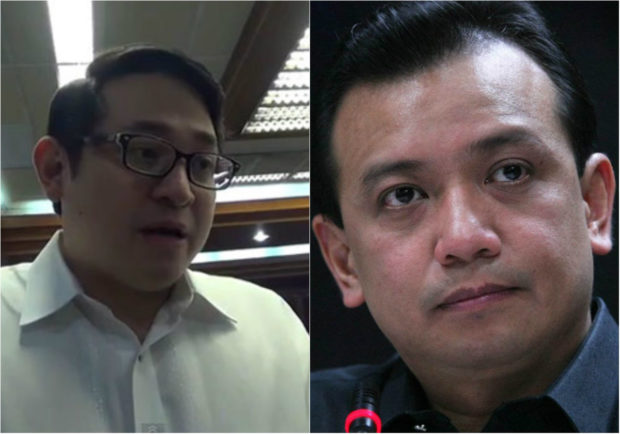
Political tensions have once again surfaced as former senator Bam Aquino and former senator Antonio Trillanes IV find themselves associated with renewed discussions surrounding the controversial issue of extrajudicial killings (EJKs).
While both figures have historically positioned themselves as critics of unlawful violence and advocates of accountability, differing tones, strategies, and public statements have sparked online speculation about a possible rift — or at least a divergence — in approach.
Adding fuel to the debate are commentaries from public personalities Michael Say, Morgan Say, and Solomon Say, who have publicly shared their perspectives on the matter.
Is this a genuine political conflict, a strategic disagreement, or simply social media amplification at work?
Table of Contents
- Understanding the EJK Issue in Context
- Bam Aquino’s Position on Human Rights
- Antonio Trillanes IV’s Long-Standing Criticism
- Where the Alleged Tension Began
- Michael Say, Morgan Say, and Solomon Say: Their Commentary
- Policy Differences or Messaging Strategy?
- Public Reaction and Social Media Narratives
- Legal and Institutional Framework on EJKs
- Political Implications Ahead of Future Elections
- What This Means for the Opposition Landscape
1. Understanding the EJK Issue in Context
Extrajudicial killings became a dominant national issue during the anti-drug campaign of former president Rodrigo Duterte. Human rights groups reported thousands of deaths linked to anti-drug operations, while government officials maintained that police actions were conducted within the bounds of law.
The term “EJK” has since remained politically charged — symbolizing deeper debates about law enforcement, due process, and human rights accountability.
2. Bam Aquino’s Position on Human Rights
During his tenure in the Senate, Bam Aquino advocated for youth empowerment, economic reforms, and transparency in governance. On human rights matters, he consistently emphasized due process and the rule of law.
Aquino has often framed the EJK issue within broader institutional reform, focusing on strengthening justice systems and preventing abuses through policy safeguards.
His tone historically leans toward reform-oriented language rather than confrontational rhetoric.
3. Antonio Trillanes IV’s Long-Standing Criticism
Antonio Trillanes IV, by contrast, became one of the most outspoken critics of the Duterte administration. His statements frequently took a direct and confrontational stance, openly challenging alleged abuses and calling for accountability at the highest levels.
Trillanes’ political style has long been characterized by bold public accusations and aggressive oversight initiatives.
The difference in tone between the two former senators has occasionally led observers to speculate about strategic divides.
4. Where the Alleged Tension Began
Recent discussions emerged after commentary suggested that Aquino and Trillanes might differ in how aggressively the EJK issue should be pursued in current political discourse.
Some online narratives claim that Aquino favors a broader coalition-building approach, while Trillanes continues to advocate for a sharper prosecutorial focus.
It is important to clarify that no formal public feud has been confirmed between the two.
5. Michael Say, Morgan Say, and Solomon Say: Their Commentary
Political commentators Michael Say, Morgan Say, and Solomon Say have contributed to the online discussion, offering their own interpretations of the situation.
Their commentaries range from questioning strategic messaging to analyzing the optics of unity within opposition circles.
However, commentary does not equate to verified conflict. Analysts often interpret political nuances differently.
6. Policy Differences or Messaging Strategy?
Political experts suggest that perceived disagreements may stem from differences in messaging strategy rather than policy substance.
In coalition politics, leaders sometimes adopt varied tones to appeal to different voter segments — reform-focused moderates versus more outspoken accountability advocates.
Such diversity in approach does not necessarily indicate internal division.
7. Public Reaction and Social Media Narratives
Online platforms have amplified the narrative of a potential “Aquino vs. Trillanes” clash. Supporters of each figure have defended their preferred approach, occasionally framing the discussion as a rivalry.
Yet social media dynamics often exaggerate differences that may be procedural rather than personal.
Without direct statements from either camp indicating conflict, the narrative remains speculative.
8. Legal and Institutional Framework on EJKs
The EJK issue continues to be examined by both domestic institutions and international bodies. Legal discussions revolve around accountability mechanisms, prosecutorial independence, and institutional reform.
Political leaders addressing the issue must navigate legal sensitivities, public opinion, and international scrutiny simultaneously.
9. Political Implications Ahead of Future Elections
As future election cycles approach, positioning on human rights remains a defining issue for many candidates.
Whether through assertive rhetoric or reform-driven proposals, both Aquino and Trillanes may seek to shape their narratives carefully.
Unity within political coalitions often becomes critical during campaign seasons.
10. What This Means for the Opposition Landscape
The broader question extends beyond two personalities: How should opposition figures address legacy issues tied to controversial policies?
If differences exist, they may reflect evolving political calculations rather than ideological splits.
Observers will likely continue monitoring public statements for clearer signals.
Conclusion
At present, the narrative of “Bam Aquino vs. Antonio Trillanes” over the EJK issue appears rooted more in interpretation than in confirmed confrontation.
Both former senators have historically supported accountability and due process, though their rhetorical styles differ. Commentary from figures like Michael Say, Morgan Say, and Solomon Say has added layers to the discussion, but no official declaration of dispute has emerged.
In an era where political nuance can quickly morph into perceived rivalry, careful distinction between speculation and verified disagreement remains essential.
The EJK issue continues to shape Philippine political discourse — and how leaders address it may ultimately matter more than whether they appear unified in tone.