
A halftime moment that may no longer belong to one stage
Super Bowl halftime has always been more than a musical intermission. It is one of the rare moments when the entire country—often divided by politics, culture, and taste—watches the same performance at the same time. For decades, that singular spotlight belonged exclusively to the NFL’s official broadcast.
But in 2026, a new dynamic is gaining momentum: the idea that halftime can be a choice.
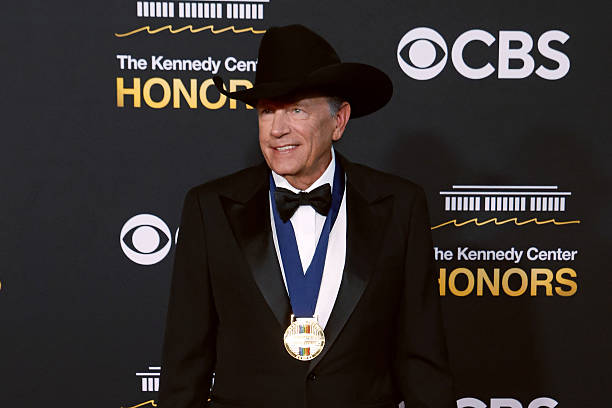
While millions will stay with the NFL’s official show, a growing number of viewers are now discussing an alternative concept—an “All-American Halftime Show” streamed live on digital platforms, designed specifically for audiences who want something different. And at the center of the conversation is a lineup that reads less like a festival poster and more like a living museum of country music: George Strait, Willie Nelson, Alan Jackson, and Dolly Parton.
The lineup that instantly changes the conversation

The idea of an alternative halftime show is not entirely new. In the streaming era, audiences have become accustomed to parallel broadcasts, second screens, and influencer commentary. What is new is the scale of ambition implied by this particular concept.
George Strait, Willie Nelson, Alan Jackson, and Dolly Parton represent four distinct pillars of country music—each with decades of cultural credibility, multi-generational fan bases, and reputations built long before viral marketing. Together, they form a lineup that is not merely popular, but symbolic.
Strait carries the calm authority of the “King of Country,” known for restraint, consistency, and a catalog that has become a soundtrack for American life. Nelson embodies the outlaw spirit and the songwriting tradition of truth-first storytelling. Jackson represents the emotional realism of small-town America, delivered with understated precision. And Parton remains a once-in-a-century figure: a superstar with unmatched warmth, charisma, and cultural reach across genre and ideology.
Even as a hypothetical, the lineup is powerful enough to provoke immediate reaction. It suggests that this would not be an “alternative show” in the sense of a niche product. It would be an alternative in the sense of a competing cultural statement.
Why an “All-American” concept is so combustible
The phrase “All-American” is loaded. It signals tradition, patriotism, and a specific idea of national identity. For some viewers, that language feels comforting—an invitation back to familiar values and familiar sounds. For others, it raises questions about who gets included in that definition and who gets left out.
That tension is exactly why the concept is catching fire online. Super Bowl halftime has increasingly leaned toward pop spectacle, global crossover appeal, and high-concept production. The alternative being discussed positions itself as the opposite: stripped-down storytelling, recognizable classics, and a focus on values that resonate strongly with a particular audience.
In other words, it is not just offering different music. It is offering a different emotional worldview.
A streaming-era reality: audiences don’t have to agree anymore
In the past, the NFL halftime show functioned as a kind of cultural town square. Even people who disliked the performer still watched, because there was nowhere else to go. The broadcast was the broadcast.
Streaming changed that.
Now, viewers can open YouTube, X, Rumble, or any number of platforms and find a competing live experience within seconds. The friction is low. The choice is immediate. And once an audience realizes they have the option to “switch halftime,” the official show loses its monopoly on attention.
That shift matters because the Super Bowl is not just entertainment—it is advertising, influence, and cultural power. The halftime show has always been a stage for shaping the national mood. A credible alternative threatens to fragment that mood into separate lanes.
Why these four artists would be uniquely effective

Not every lineup could pull off a competing halftime moment. But Strait, Nelson, Jackson, and Parton are uniquely positioned for three reasons: familiarity, trust, and emotional permanence.
Their songs are not tied to one demographic. They are embedded in family memory. Many fans did not “discover” these artists through an algorithm—they inherited them. Their music has been played at weddings, funerals, road trips, and holiday gatherings. That kind of familiarity creates trust, and trust creates attention.
A viewer might not be interested in a new artist they’ve never heard of. But millions of Americans know exactly what it feels like to hear “Amarillo by Morning,” “On the Road Again,” “Remember When,” or “Jolene.” Those songs are not just hits; they are cultural landmarks.
In a high-stakes environment like Super Bowl Sunday, familiarity can be more powerful than novelty.
What the alternative show would likely emphasize
The framing of this concept is clear: rather than high-gloss pop choreography, it would highlight classic country elements—band-driven arrangements, recognizable instrumentation, and a storytelling tone.
The emphasis would likely fall on themes often associated with traditional country: home, love, work, hardship, faith, and endurance. These are not political themes on their face, but in a polarized cultural environment, they can become political simply by being positioned as “values” in contrast to something else.
That is where the controversy grows. The show is not merely a concert. It becomes a statement about what kind of America is being represented during the most watched entertainment event of the year.
The internet reaction: excitement, anger, and instant tribalism

Online response to the idea has already taken predictable shape.
Supporters describe it as a “return to real music” and a halftime that “feels like home.” They praise the lineup as authentic, legendary, and emotionally grounded. Many argue that country music has been underrepresented on the biggest stages and that this alternative would finally give traditional fans something made for them.
Critics, meanwhile, see the framing as divisive by design. They argue that labeling one lineup “All-American” implies that other genres and cultures are less American, or less legitimate. Others dismiss the concept as nostalgia packaged as rebellion.
The most intense reactions, however, come from the fact that both sides feel the other is trying to “claim” the halftime moment as a cultural symbol.
The bigger story: Super Bowl halftime as a cultural battleground
The most important takeaway is not whether this alternative broadcast becomes real or remains an internet-fueled concept. The bigger story is what it reveals about American culture in 2026.
People no longer argue only about politics. They argue about symbols. About representation. About what “American” means. About what belongs on the biggest stage. About what kind of music is treated as mainstream and what is treated as niche.
The halftime show has become a proxy for those debates because it is one of the last events where everyone is supposed to watch together.
If audiences split, the split will not just be musical. It will be cultural.
A choice disguised as entertainment

At its core, the alternative “All-American Halftime Show” is framed as simple: if you don’t like the official performance, you can watch something else.
But the truth is more complicated. Choosing a halftime show is no longer just about taste. It becomes a signal—about identity, values, and belonging.
And that is why a lineup featuring George Strait, Willie Nelson, Alan Jackson, and Dolly Parton is so potent. These artists are not only musicians. They are symbols of a certain American emotional language: plainspoken, resilient, rooted.
What happens next
As Super Bowl Sunday approaches, the debate is likely to intensify. The official halftime show will continue to draw attention. But the alternative concept, whether formalized or not, will keep growing because it taps into a real demand: the desire for a cultural moment that feels familiar, stable, and personally meaningful.
If the internet truly does split in two at halftime, it will not be because of technology alone. It will be because audiences no longer accept one shared narrative. They want a choice—and they want that choice to reflect who they believe they are.
In 2026, the halftime show may no longer be one stage.
It may be a mirror.
