The idea of reconciliation between Prince Harry and the British Royal Family has once again been thrown into question, following revelations that have left royal watchers openly frustrated. What was initially presented to the public as a hopeful sign of healing now appears, to many experts, to be a carefully manufactured narrative driven by the Sussexes themselves rather than any genuine thaw in relations.
At the center of the controversy is the sudden emergence of claims that King Charles III would personally open the Invictus Games in 2027, when the event is set to return to the UK in July. Crucially, reports indicate that this information was released without prior notice to the Palace. Instead of being discussed privately, the story appeared in the press, effectively placing the King in the public spotlight before he had any opportunity to respond.
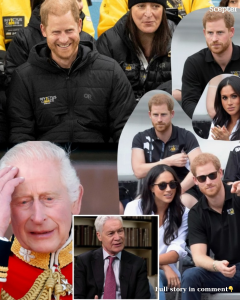
Royal commentators were quick to criticize the tactic. Several described the move as “distasteful,” arguing that it deliberately weaponized a charitable event involving wounded and injured veterans to apply emotional pressure on the monarch. One senior royal correspondent remarked that announcing such expectations publicly was “a passive-aggressive attempt to force the King’s hand,” rather than a sincere effort to rebuild trust.
The situation is particularly sensitive because of the King’s constitutional role. As head of the armed forces, any involvement with an event like the Invictus Games carries symbolic weight. By allowing the narrative to form that his attendance was expected, Harry effectively placed his father in an impossible position: attend and appear to reward public pressure, or decline and risk being portrayed as unsupportive of veterans.
Several experts pointed out that there is no historical obligation for the monarch to attend the Invictus Games. When the event was launched in London in 2014, Queen Elizabeth II did not attend, despite strong support from senior royals including then-Prince Charles and Prince William. In that context, the suggestion that King Charles “should” open the Games in 2027 is a matter of personal desire, not royal duty.
What troubled commentators most was the implication that the Invictus Games were being used as leverage in a personal family dispute. One royal analyst noted that the focus should remain firmly on the achievements and sacrifices of the veterans, not on whether a father and son might share a public stage. “It cheapens the event,” the analyst said, “when it becomes a bargaining chip in a PR battle.”
The backlash intensified as more voices within royal circles expressed discomfort. Insiders suggested that many within the institution view this as another example of private matters being dragged into the public arena to create pressure and sympathy. In their view, genuine reconciliation does not begin with headlines, but with quiet conversations behind closed doors — something notably absent in this case.
Adding to the complexity is the timing. The 2027 Invictus Games coincide with Queen Camilla’s 80th birthday, a milestone that the King may reasonably wish to prioritize. Some commentators described this overlap as an “escape hatch” for the monarch, providing a legitimate reason to decline without appearing dismissive. Even so, the very need for such an escape highlights how awkward the situation has become.
Speculation has also grown around the possibility of Meghan Markle’s involvement in the event. To critics, her potential presence only reinforces the perception of a coordinated PR strategy designed to project unity where little may exist. One observer bluntly summarized the mood: “What the public is seeing isn’t reconciliation. It’s performance.”
Perhaps the most damaging aspect of the episode is how it has undermined trust in the Sussexes’ messaging. By allowing the story to circulate before securing any agreement from the Palace, they created expectations that were never guaranteed. When those expectations are inevitably unmet, the blame risks falling not on the architects of the narrative, but on the institution that refused to be pressured.
In the end, the consensus among royal experts is strikingly clear. There is no confirmed reconciliation underway, no agreed plan for the King to attend, and no quiet rebuilding of bridges behind the scenes. What exists instead is a public storyline crafted to suggest progress, while the reality remains unchanged. As one commentator put it, “If this is reconciliation, it’s the loudest and most public kind — and that’s usually how you know it isn’t real.”
For many observers, the episode serves as a reminder that appearances can be misleading. The image of harmony may play well in headlines, but beneath it lies a relationship still defined by mistrust, miscommunication, and competing agendas. And in that gap between image and reality, the Invictus Games have found themselves uncomfortably caught in the middle.
