How “Dixieland Delight” Became the Song Alabama Fans Refused to Sing Quietly
Some traditions are planned. Others are born when thousands of people decide, almost without asking permission, that something belongs to them now.
That is what happened with “Dixieland Delight” at Bryant-Denny Stadium.
When Alabama released the song in 1983, it was simply another country hit from one of the biggest bands in America. Warm, melodic, and easy to sing, it sounded like the kind of song made for car radios and summer nights. Nobody could have guessed that decades later it would become one of the loudest, most debated traditions in college football.
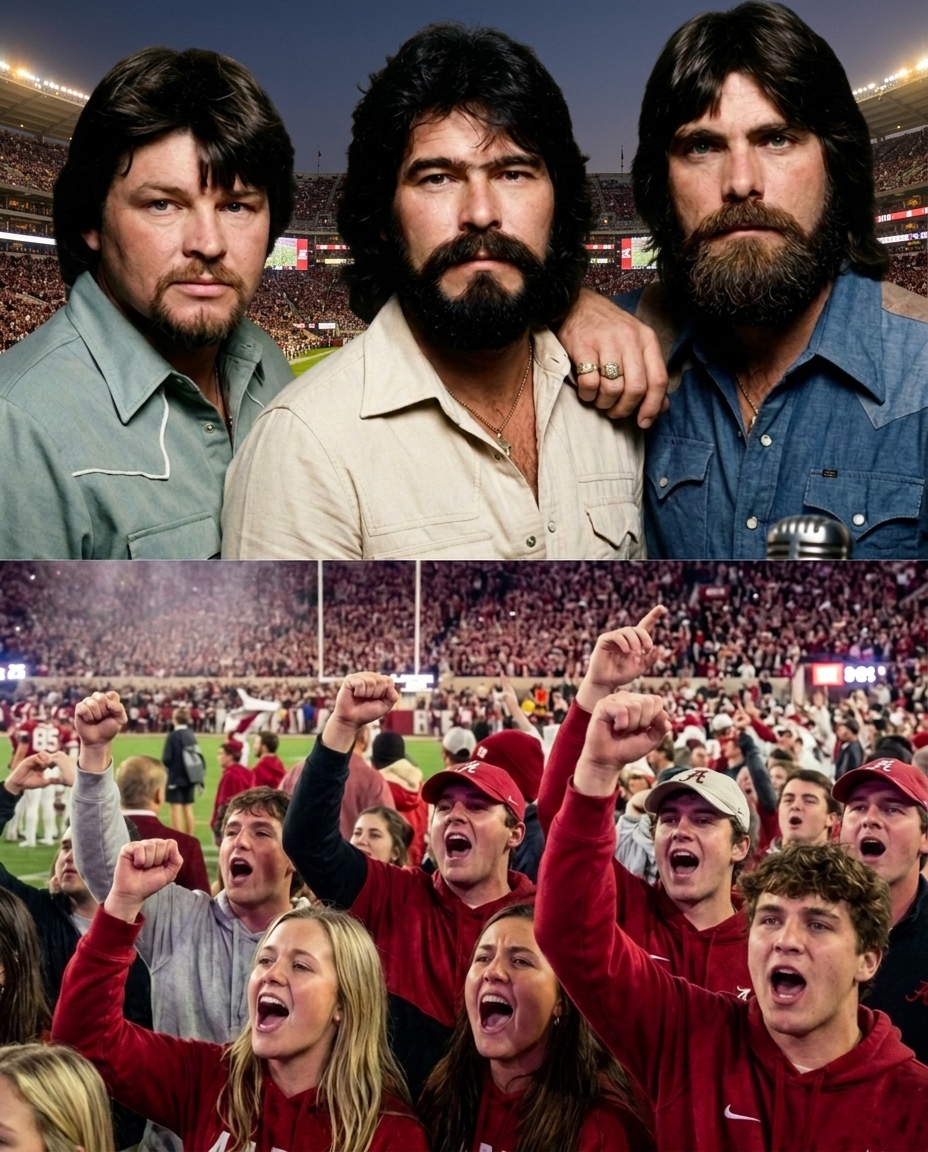
At Alabama football games, “Dixieland Delight” grew into a fourth-quarter ritual. The first notes would hit, the stadium would rise, and more than 100,000 people would sing along. For many fans, it was not just a song. It was a signal. The game was entering its emotional final stretch, and the crowd was no longer just watching. The crowd was part of the show.
When the Crowd Changed the Lyrics
Then the students and longtime fans did what college football crowds always do: they personalized it.
Between the official lyrics, Alabama fans began shouting their own lines. Some were playful. Some were rowdy. One of them, aimed directly at Auburn, became the version everyone knew but nobody in authority could comfortably defend.
That is when the tension started.
The University of Alabama loved the energy of the tradition, but not the part that could not be cleaned up for television, families, recruits, and corporate sponsors. After the 2014 season, the song disappeared from Bryant-Denny Stadium. For three years, a tradition that felt untouchable was suddenly gone.
And that silence said a lot. It proved the school understood how powerful the moment had become. Nobody bans a song unless that song means something.
The Return Came With Rules
In 2018, “Dixieland Delight” returned, but not without conditions. The message from the university was clear: enjoy the song, keep the tradition, but sing it the “right” way.
The problem was that traditions do not usually return in a neat, controlled version.
To guide the crowd, Alabama’s game-day presentation leaned into a safer substitute. At the key moment, the stadium sound system pushed a loud, pre-recorded “Beat Auburn!” over the speakers. It was an obvious attempt to redirect the chant into something cleaner, something broadcast-friendly, something the university could live with.
But fans heard that effort for what it was: a compromise created from above for something that had always lived from below.
And when 100,000 people believe a tradition belongs to them, a speaker system is not much of a weapon.
Why the Song Still Matters
What makes this story so fascinating is that it is not really about one banned word. It is about ownership.
Schools create pageantry all the time. Bands rehearse it. marketing departments shape it. video boards package it. But every once in a while, something escapes that system and becomes truly public. “Dixieland Delight” did exactly that.
It stopped being just a soundtrack choice and became a living argument between institution and crowd. The university wanted a proud, polished ritual. The fans wanted the raw version they had built together over years of Saturdays, rivalries, and noise.
That is why every attempt to soften it has felt temporary. The song is too tied to memory now. Too tied to emotion. Too tied to the feeling of being in that stadium with your voice swallowed by 100,000 others and somehow still heard.
The Iron Bowl Reminder
By the time the 2024 Iron Bowl arrived, the point had already been made many times, but Alabama fans made it again anyway. When “Dixieland Delight” rolled through Bryant-Denny Stadium, the crowd did what the crowd has always done. The official version played. The unofficial version thundered over it.
For three straight minutes, the university had the speakers. The fans had the volume.
And that may be the real reason this story endures. It captures something deeply true about college football: the traditions that last are not the ones printed on promotional schedules. They are the ones fans defend with memory, stubbornness, and full lungs.
“Dixieland Delight” is still Alabama’s song in the stadium. But on nights like that, it feels even more like the crowd’s song first.
Programs can manage the music. They can never fully manage what 100,000 people decide it means.